
If you’ve ever watched a woman give birth on TV or in the movies, you probably noticed that she’s lying on her back and pushing. In fact, you’ve probably been subconsciously led to believe that this is the way labor and birth work… on your back.
The truth is that laying on your back to labor — the lithotomy position — is one of the worst (if not the worst) labor positions. Thanks Hollywood for misleading so many women!
Although no evidence suggests that it is safe or even beneficial to the laboring woman, it is still most commonly assumed during the 2nd stage of labor. From slowing down labor to increasing the risk of trauma, this labor position can negatively impact your natural birth experience.
As a mom who has labored on her hands and knees and gave birth squatting twice, I can assure you that if your goal is to have a quicker and an easier natural birth, this is the position you want to avoid! Here are 5 reasons why the lithotomy position is one of the worst labor positions.
Skip the Research… It's Already Been Done
12+ years of label-reading, testing, and returns — these products earned their place on my Amazon store.
Shop My Amazon Picks1. This labor position makes your pelvis smaller
Laying down reduces the size of your pelvic outlet by up to a whopping 30%!
A lot of moving, shifting, and stretching takes place within the bones and ligaments of your pelvis during childbirth.
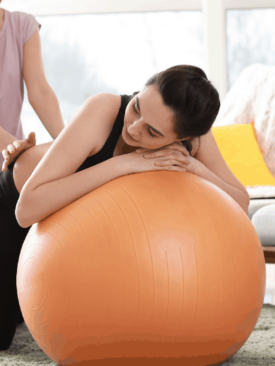
To set yourself up for a smoother and safer natural birth, it’s important that you opt to labor in upright positions, which allow for your pelvic outlet to be fully open and aligned. You can labor while standing up, on all fours, on your knees while leaning forward over an exercise ball for support, etc. These positions would keep your pelvis open to accommodate your descending baby.
If you opt to have an epidural, you will have decreased mobility. However, with some assistance, you can get into the side-lying position (preferably on your left side), as opposed to the lithotomy position assumed in almost all epidural births. A member of your birth team can support your leg and knee, and you can also use a peanut ball which can rest between your legs in between contractions in order to keep your pelvis open.
This position allows you to relax and preserve your energy while reducing your chances of tearing. It also leads to more spontaneous births. It is important to note that the side-lying position may not be the best position to adopt during the first stage of labor, where being upright is vital to the dilation of the cervix and the decent of the baby.
2. It can slow down your labor and weaken contractions
Lying down on your back, especially during the first stage of labor, slows down the descent of your baby. During the second stage of labor “pushing stage”, the lithotomy position slows the natural physiological process of labor by forcing your body to work much harder against gravity. It’s comparable to pushing a stroller uphill VS pushing a stroller downhill.
It’s a lot harder going up!
This labor position also slows blood flow to the uterus, making contractions much shorter and much less effective, thus lengthening the duration of your labor unnecessarily.
Contractions are an integral part of labor and play various roles, from helping your cervix dilate, to expelling your baby and placenta out of your uterus. Being in this position increases the risk of exhaustion, perineal trauma, fetal distress, and medical interventions such as administering Pitocin (synthetic oxytocin).
3. It increases the risk of pelvic floor damage and trauma
It is much more common for women in this position to tear during the 2nd stage of labor (pushing stage). This study, which evaluated over 100,000 births, revealed that this labor position increased the women’s risk of an obstetric anal sphincter injury related to long-term maternal complications such as anal incontinence, sexual dysfunctions, etc.
Being upright promotes optimal spinal alignment, which facilitates the natural physiological process of labor for both mom and baby. The lithotomy position is also said to aggravate or trigger symptoms of SPD (symphysis pubic disorder) which can impede your postpartum recovery.
Being upright promotes optimal spinal and pelvic alignment which facilitates the natural physiological process of labor for both mom and baby.
4. You may experience more pain if you birth in this position.
In unmedicated births, the lithotomy position increases the pain felt during labor.
Want to Save This Post?
Being in the lithotomy position actually increases the levels of pain you experience during labor. One study revealed significant differences between a group of moms who labored in an upright position and another group who labor in the recumbent position (lying down).
The finding revealed that the women who labored upright experienced a decrease in the 3 stages of labor, better neonatal outcomes and higher satisfaction with the assumed position.
Birthing in an upright position had a positive effect on the progress of labor, decreased duration of the three stages of labor, better neonatal outcomes, and improved parturient women’s satisfaction with the assumed position.
The study recommended that all parturient women in low-risk labor should be informed about the benefits of assuming upright positions during first stage of labor, and be encouraged and supported to use them.
Concerning the pain intensity, the findings of the present study revealed high statistically significant differences between the upright and recumbent groups in the Mean Pain Scores during the 2nd, 3rd, and 4th hours after assuming the upright position.
These may be due to pain during the first stage of labor resulting from a combination of uterine contractions and cervical dilation. Painful sensations travel from the uterus through visceral afferent or sympathetic nerves that enter the spinal cord through the posterior segments of thoracic spinal nerves. Maternal physical and psychological comfort in labor is crucial for preventing additional stress.
This can further be accomplished by allowing the mother to move freely and follow her body’s signals to mobilize and change position during labor. These findings were in the same line with Angel Rajakumari et al.
The finding revealed that the women who labored upright experienced a higher satisfaction with the assumed position. This position increases your risk of getting an epidural which can lead to a cascade of interventions. In an unmedicated birth, being able to move during labor is an important coping mechanism that enables you to relax, and it also gives you a greater sense of control during labor.
5. It makes labor much harder on your body and your baby.
The lithotomy position places all of the weight of your growing on your vena cava. The vena cava is a large vein that carries blood from your lower body and torso to your heart.
Compressing it hinders proper blood flow, lowering your blood pressure. It also directly affects your baby, who receives oxygenated blood from you directly from the umbilical cord through the placenta.
Poor blood circulation to your baby means less oxygen for your baby, and this can lead to fetal distress and ultimately end in a cesarean birth. This can lead to internal fetal monitoring, which puts you and the clock and puts you and your baby at a higher risk of more invasive medical interventions.
This study found a significant statistical difference in the APGAR scores in neonates born of upright and recumbent moms.
Although this is one of the most widely practiced labor positions, especially in hospital births, no evidence suggests that it is safe or that it promotes a satisfactory experience for the mama or the baby.
Take the Guesswork Out of Labor With My Natural Birth Toolkit
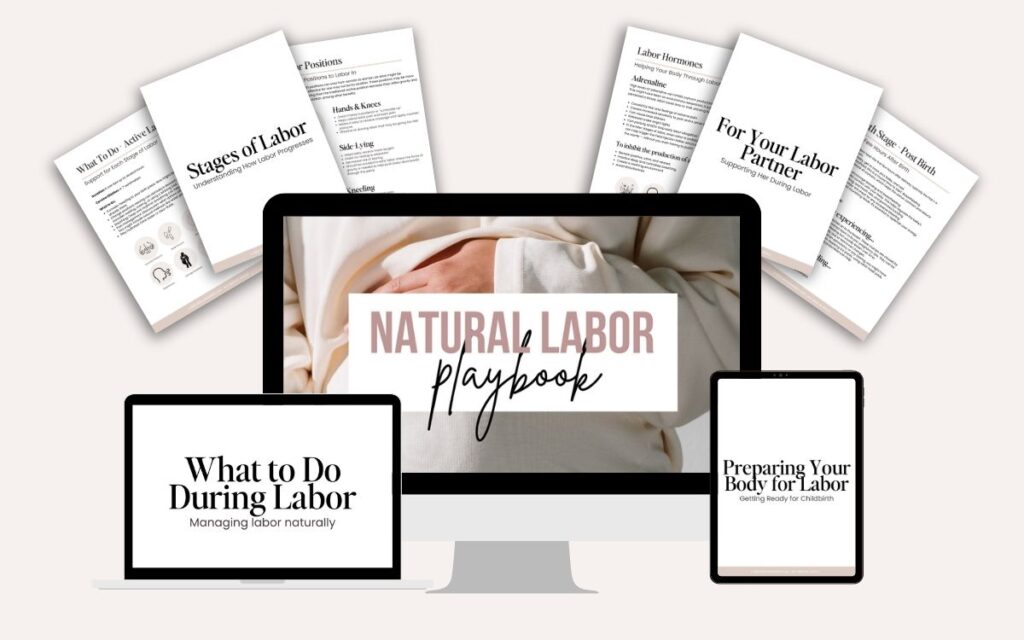
Are you worried you might forget all of your labor prep and info… during labor?! Grab The Natural Labor Playbook, your ultimate labor cheat sheet for natural-minded mamas for only $7!






Very interesting and informative for mommies to be. I had a scheduled c-section so I don’t have any experience in regards to labor and delivery and am not a good resource in his area. I never thought about how unnatural this would be and how it would create extra stress on Mommy and baby.
Thanks for reading!!
Very interesting and informative for mommies to be. I had a scheduled c-section so I don’t have any experience in regards to labor and delivery and am not a good resource in his area. I never thought about how unnatural this would be and how it would create extra stress on Mommy and baby.
Thanks for reading!!
I have experienced being forced to stay in this position because my baby was in distress in any other position. I was also induced so it was a very rough experience. I wish I could have stood up or gotten on all 4 to elevate the pressure and pain. Thanks so much for sharing this! Great info
Thank you so much for sharing your story, I appreciate it!
I have experienced being forced to stay in this position because my baby was in distress in any other position. I was also induced so it was a very rough experience. I wish I could have stood up or gotten on all 4 to elevate the pressure and pain. Thanks so much for sharing this! Great info
Thank you so much for sharing your story, I appreciate it!
I had heard that this wasn’t a good way to labor. Interesting to learn about all the reasons behind it. It doesn’t seem very natural when you think about it.
Yup- It sure doesn’t! Thanks for reading 😉
I had heard that this wasn’t a good way to labor. Interesting to learn about all the reasons behind it. It doesn’t seem very natural when you think about it.
Yup- It sure doesn’t! Thanks for reading 😉
Thank you for this info! I’ll remember it if I give a birth to the potential second one.
Fortunately, my nurse never suggested me this position. She rather prefer me to jump on a ball, walking or even bath (the best option!)… But in the very end I was so powerless, that I didn’t want anything else than side-laying in a peanut position 😉
Side lying is awesome. Helps you rest but still keeps you pelvis open with the peanut ball. You had a great nurse! 🙂 Thanks for reading!
Thank you for this info! I’ll remember it if I give a birth to the potential second one.
Fortunately, my nurse never suggested me this position. She rather prefer me to jump on a ball, walking or even bath (the best option!)… But in the very end I was so powerless, that I didn’t want anything else than side-laying in a peanut position 😉
Side lying is awesome. Helps you rest but still keeps you pelvis open with the peanut ball. You had a great nurse! 🙂 Thanks for reading!
Wow. This is sooo interesting! I had no idea. I was especially surprised to read it can cause more pain. It’s sad that 100 years ago or so women were strapped in this position for days. No wonder labor took so long.
As a natural mommy who has her babies at home, I can’t imagine staying in one place while laboring. So thankful to never have put my legs in stirups. Can’t imagine it. Thanks for the blog!
Wow you’re such a strong mommy! I’m planning on having my next baby at home as well. My 2 were natural in a hospital though…I can’t imagine having to be on my back it just sounds like it would be very painful and uncomfortable! Thanks for reading!
Wow. This is sooo interesting! I had no idea. I was especially surprised to read it can cause more pain. It’s sad that 100 years ago or so women were strapped in this position for days. No wonder labor took so long.
As a natural mommy who has her babies at home, I can’t imagine staying in one place while laboring. So thankful to never have put my legs in stirups. Can’t imagine it. Thanks for the blog!
Wow you’re such a strong mommy! I’m planning on having my next baby at home as well. My 2 were natural in a hospital though…I can’t imagine having to be on my back it just sounds like it would be very painful and uncomfortable! Thanks for reading!