If you’re looking to avoid some of the preservatives, fragrance, and extra ingredients commonly found in wet wipes, you may have started wondering about dry baby wipes. I felt like wet wipes were my only real option with my first two babies. It wasn’t until my third baby that I realized the wipe didn’t have to come out of the package already wet. I could add water when I needed it—and use the same wipe dry for spit-up, drool, or patting skin dry.
Once I started comparing dry wipes, though, I realized they aren’t all the same. They can be made from cotton, cotton viscose, bamboo-derived rayon, polyester, or a blend. The listings can be even more confusing, with different sizes, thicknesses, counts, and vague claims like “natural” or “plant-based.” After using dry wipes almost exclusively and researching what the most popular options are actually made from, this is the guide I wish I had when I was ready to switch. Below, I’ll explain whether dry wipes are really better for babies, why you might choose them, what their downsides are, and which cotton dry wipes are worth buying.
My quick answer: I believe plain 100% cotton dry wipes are a better everyday choice because you control exactly what touches your baby’s skin. Wet wipes contain a stored liquid formula that requires a preservation system, while dry wipes let you use cotton and water. For the full ingredient comparison, see my guide to dry wipes vs. wet wipes.
Quick picks
The best dry baby wipes are 100% cotton, unscented, free of added lotions, and thick enough to handle a messy diaper in one or two passes once they’re wet. Because they’re sold dry, they don’t need a preservative, so you’re in control of everything that touches your baby’s skin.
- Thick, soft everyday cotton wipe: Gentle Nursery Extra-Thick Dry Cotton Baby Wipes
- Easiest to find in stores: Honest Dry Wipes
- Lowest bulk price among the cotton options I compared: Whoopsie Wipes
| Wipe | Material | Thickness | Best for | Link |
|---|
What are dry baby wipes?
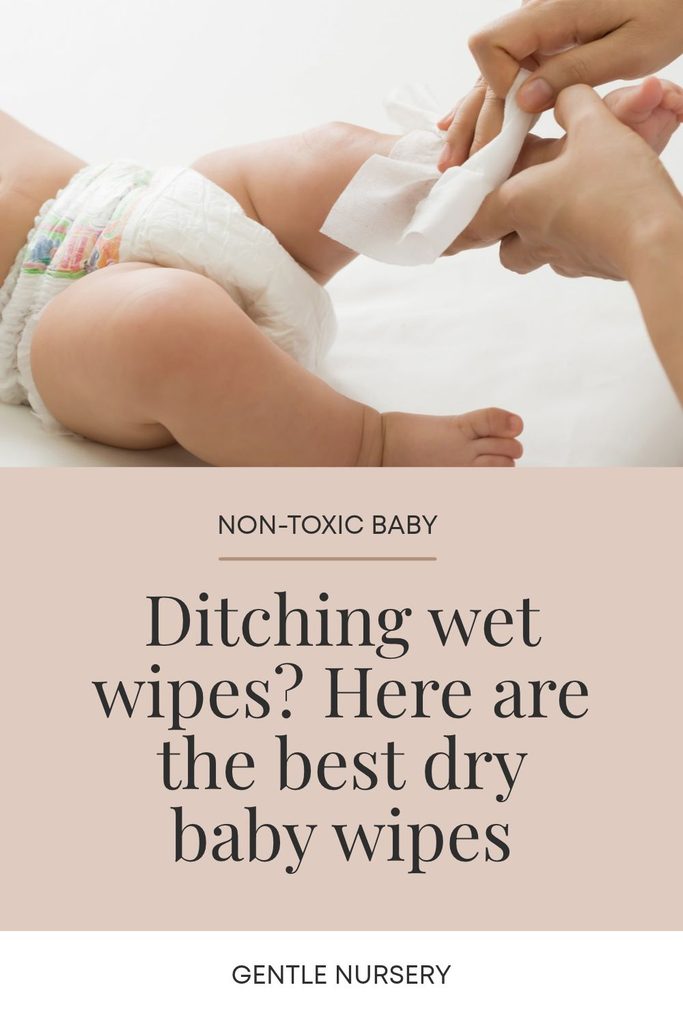
Dry baby wipes are disposable cloth-like wipes that are made without water, cleansing solution, lotion, or other liquid already added. You can use them dry or wet one at a time with clean water right before a diaper change. They’re also versatile enough to be used to wipe drool, messy hands and faces, and for everyday messes.
I know that sounds almost too simple, but the format is what makes them so useful. A wet wipe has to remain moist in a sealed package, so its formula needs a preservation system to control microbial growth on a product shelf for 2-3 years. A plain dry wipe has no stored liquid to preserve. You still need to check the label, though, because not every dry wipe is made from the same material and some may have added treatments.
Why parents are switching to dry wipes
It took me three babies to realize that I didn’t need to use a wet wipe every single time I went to change my baby’s diaper, wipe her hands or face, or clean up after mealtime. And once I did switch to dry wipes, it became so simple that I didn’t even miss using wet wipes! But I’m not alone; more and more parents are switching to dry wipes, and here’s why:
You control what touches your baby’s skin.
With a plain cotton wipe, you decide whether to use it dry, add water, or use a cleanser recommended for your baby. There is no pre-applied fragrance, lotion, or cleansing formula to sort through. This is probably the biggest reason I made the switch. I did not want to have to dig into another ingredient list every time a brand reformulated its wipes, or grin my teeth and use wet wipes, knowing they contain preservatives I would rather not use on my baby’s skin.
They make a water-only routine easy.
Some babies do best with a very simple routine, especially during the newborn stage or when the diaper area is already irritated. The American Academy of Pediatrics recommends gentle cleaning and notes that water from a squirt or spray bottle can reduce rubbing when a rash is severe. The American Academy of Dermatology also suggests a soft cotton cloth and warm water for a child whose eczema may be triggered by baby wipes.
You can also control how wet or warm the wipe is.
You can barely dampen a wipe for a small cleanup, fully wet it for a messy diaper, or use warm water during a middle-of-the-night change. You are not stuck with a wipe that feels dripping wet, nearly dry, or cold. I love the flexibility!
They do more than diaper duty.
I use dry wipes for spit-up, drool, runny noses, high-chair messes, and patting skin dry after a diaper change. They are somewhere between a baby wipe, tissue, and disposable washcloth, which is why I keep a pack in several rooms, in my diaper bag, and in the car.
They do not dry out in the package.
Because they start dry, an opened package can sit in a diaper bag, car, bathroom, or changing station without turning into a stack of unusable dried-out wet wipes. You do need access to water for a messy diaper, but the wipes themselves store well. (I keep a spray bottle in the changing station, which makes wetting the wipes very simple; I will also sometimes just run them under the sink to get them wet and they work just as well as a traditional wet wipe.)
They can reduce rubbing if the wipe is thick and soft.
A thick wipe can clean a mess in fewer passes than a thin wipe that pills or tears. That matters because aggressive rubbing can make already-irritated skin feel worse. Thickness is not just a luxury feature here; it affects how the wipe performs, and that’s why it plays such an important role in the recommendations I make below.
What to look for in dry baby wipes
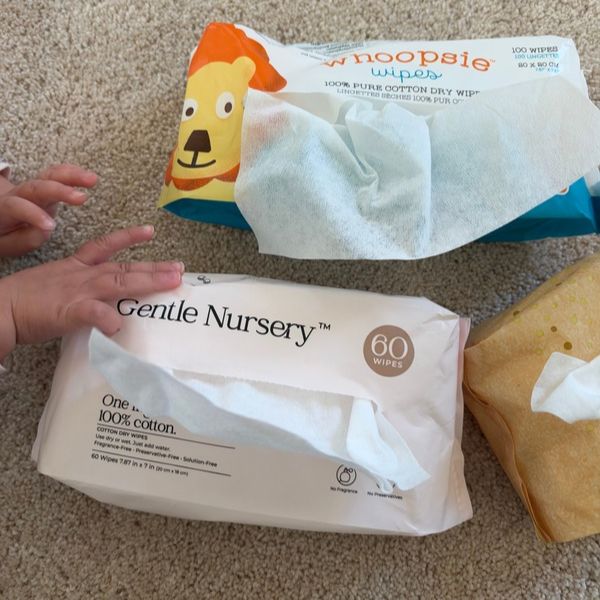
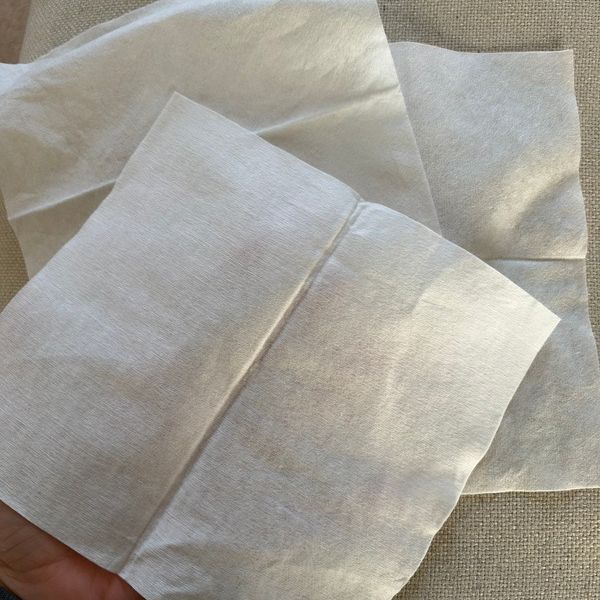
Just because they’re dry doesn’t mean you can just grab any brand. A lot of the cheap dry wipes on the market are made from synthetic materials. Here’s what I would look for when shopping for a baby dry wipe, after having tried so many different brands and products on the market.
- Made from 100% cotton: Cotton is a natural fiber that can be cleaned and formed into a wipe. Many “plant-based” or “bamboo” wipes are actually viscose or rayon, fibers made by dissolving plant pulp and regenerating it into a new material. Some wipes also contain polyester, which is plastic. That does not mean viscose is automatically unsafe, but it is not the same material as cotton. If you specifically want a cotton wipe, look for 100% cotton in the material disclosure rather than assuming “plant-based” means cotton. Organic cotton is a nice bonus if it fits your budget, but conventional cotton is perfectly fine for a baby wipe in my opinion.
- Nothing added: My ideal dry wipe is just the cloth. Some wipes are treated with a dry lotion, botanical ingredient, or scent that activates when wet. If your goal is a simple routine, or your baby has reactive skin, choose a plain wipe and verify the full product description.
- Thick enough to hold up when wet: I tried almost every brand of dry wipes out there, and most are quite thin. Thin dry wipes pill, tear or fall apart once they’re damp, and you end up using as many as three or four to get the job done. A thicker wipe cleans in fewer passes, which means less rubbing on your baby’s skin and fewer wipes per change.
- Soft, without an aggressive texture. A little texture can help lift mess, but a wipe should not feel scratchy. If a wipe feels rough on the inside of your wrist when damp, I would not use it to repeatedly rub delicate or already-irritated skin.
- A size that fits the job: Most baby dry wipes are around 7 to 8 inches square, which is a good size for diaper changes, faces, and everyday cleanups. Larger hospital-style cloths are great for blowouts but can feel bulky for everyday changes, and these wipes are typically synthetic.
- Real certifications, not just claims: “Hypoallergenic,” “dermatologist tested,” “natural,” and “non-toxic” do not tell you what the wipe is made from. I would rather see a clear fiber disclosure any day over one of these terms. Certifications can also add useful context. GOTS addresses organic textile processing, and OEKO-TEX Standard 100 indicates testing for a list of harmful substances. A certification is still something to verify; look at which product or material it covers instead of treating the logo as a shortcut for every purchasing decision.
And while we’re on the subject, I would definitely avoid these:
- ❌ Bamboo-based wipes, which require heavy processing
- ❌ Cotton viscose wipes, which aren’t made from the cotton boll at all
- ❌ Synthetic materials or wipes that don’t disclose the materials at all
- ❌ Very thin wipes that fall apart once wet
- ❌ Rough, heavily textured wipes that require more rubbing
- ❌ Added fragrance or a dry lotion when the point is to keep the routine simple
The best dry baby wipes, reviewed
Good dry baby wipes can work every bit as well as wet wipes when you have a simple wetting setup ready (in fact, possibly even better!). After researching the materials in popular brands and personally trying several options, these are the ones I would consider.
I compared each wipe based on its disclosed material, thickness when wet, texture, durability, how many wipes I typically needed for a diaper change, price per wipe, certifications, and availability. I personally used the wipes described from my own experience below. Product specifications and prices were checked against current manufacturer or retailer listings.
Gentle Nursery Dry Cotton Baby Wipes
Best for: families who want a thick, soft wipe that’s versatile and nothing but cotton.
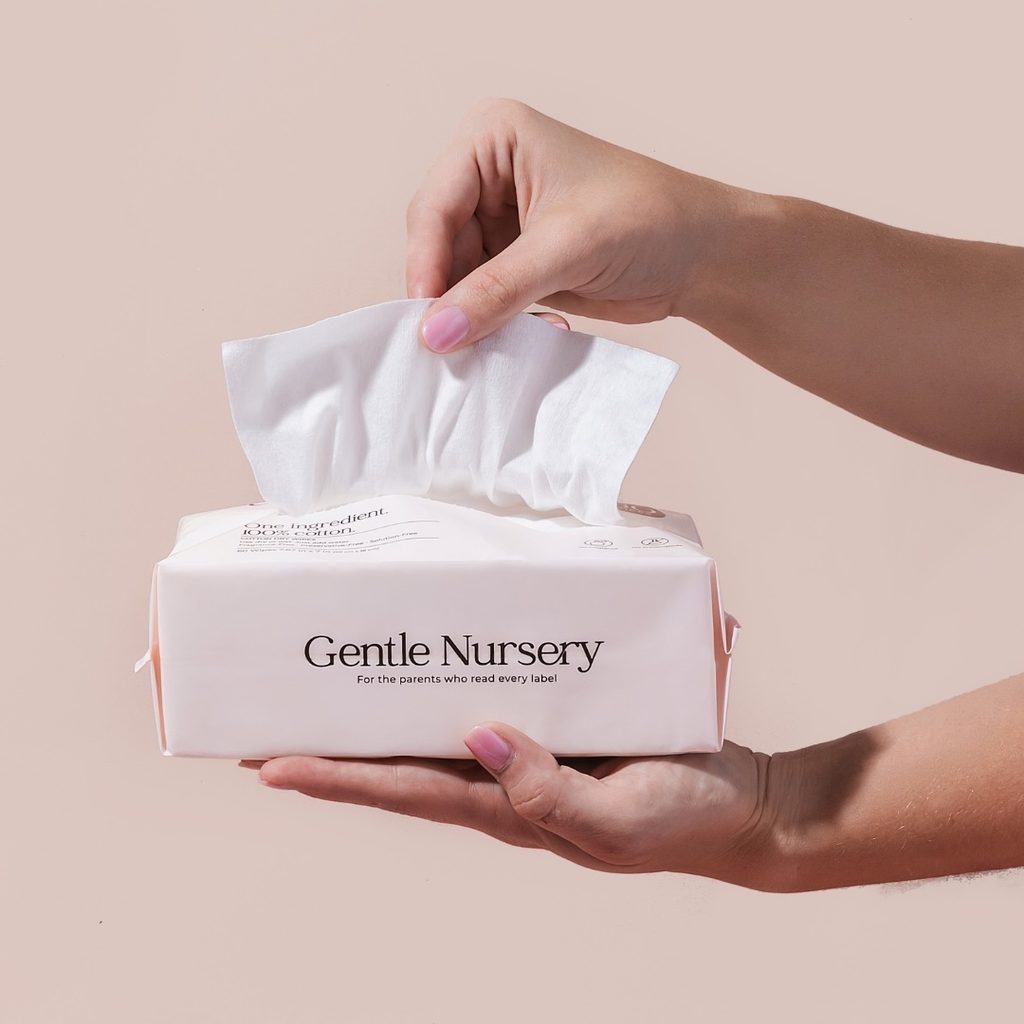
These dry baby wipes are 100% cotton with no formula, preservatives, lotion or fragrance added. They are designed to be extra thick, and have a soft, premium feel to them. Because they are thicker than the other dry wipes I tried, they feel more absorbent and efficient than a thinner wipe.
Because of their thickness rating, they’re designed to handle a messy change in one or two wipes once they’re wet, and they work just as well dry for spit-up, drool and patting skin dry. They come in pouches, so you can keep one at the changing table and one in the diaper bag. I also keep one in the kitchen next to the high chair and one in the car for convenience.
Most of the time, I use these dry, and they clean the messes really well, even when dry. But when I do need to wet them, I simply run them under the sink before a diaper change or spray them with a water bottle that I keep at my changing station. It was really easy to make the switch from wet wipes to these dry wipes because they’re so versatile and work so well.
One other thing I love about the size is that the wipes pouch doesn’t take up an excessive amount of space in my diaper bag. Unlike some of the other brands I was trying out, it feels like the perfect size and that it takes up just the right amount of space.
Full disclosure: Gentle Nursery Dry Cotton Baby Wipes are my own product. I created them after testing thinner dry wipes and wanting a thicker cotton option that could handle a diaper change in fewer passes. I’ve included the other options I would genuinely consider so you can choose based on your priorities and budget.
Honest Dry Wipes
Best for: grabbing a pack at Target to try dry wipes.
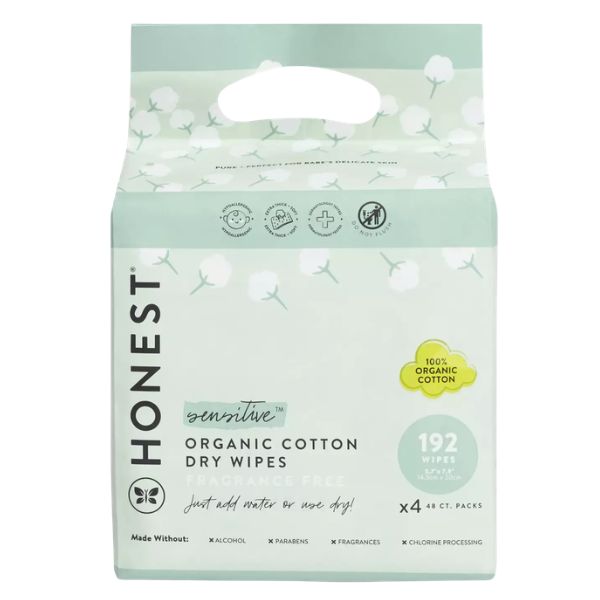
Honest is one of the first brands of dry wipes that I began to experiment with, and I love the fact they are available in-store at my local Target. These dry wipes are 100% organic cotton and texturized, meaning they have little pearl design on the wipe itself. These were a great intro to dry wipes, but they are very much on the thin side. They’re a great choice, but keep in mind that these are probably the thinnest wipes on this list.
They have also been in and out of stock for a while, and sometimes they’re only available online at Target (vs. in-store), so I wasn’t sure if Honest Co. was discontinuing them. If these are your preferred wipes, I would definitely buy in bulk!
Nest Designs Organic Cotton Dry Baby Wipes
Best for: parents who want certified organic and unbleached.
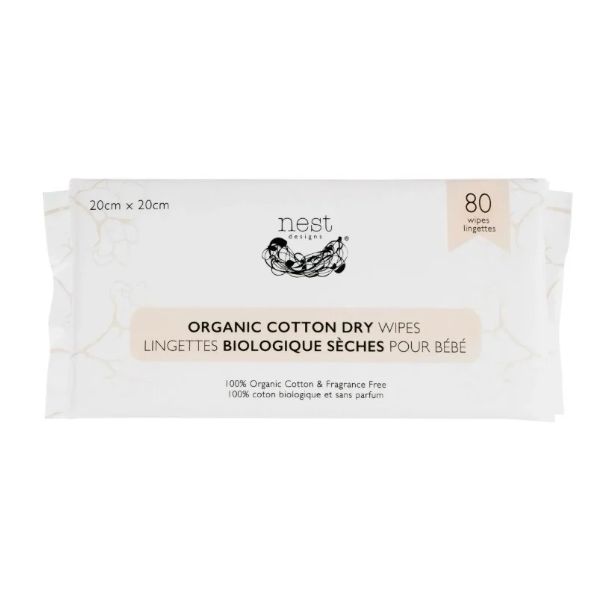
Nest Designs dry wipes are made from GOTS-certified, unbleached organic cotton. GOTS is the strongest certification for organic textiles, covering both the fiber and how it’s processed. They’re a natural fit if organic is the top priority for you; I did find them to be a little less durable than some of the other wipes on this list. The other main drawback is pricing; normally, these come out to a little under 14 cents per wipe; the brand also sells a conventional cotton version, which is priced a little lower.
Tiny Twinkle Cotton Dry Wipes
Best for: a budget-friendly 100% cotton option.
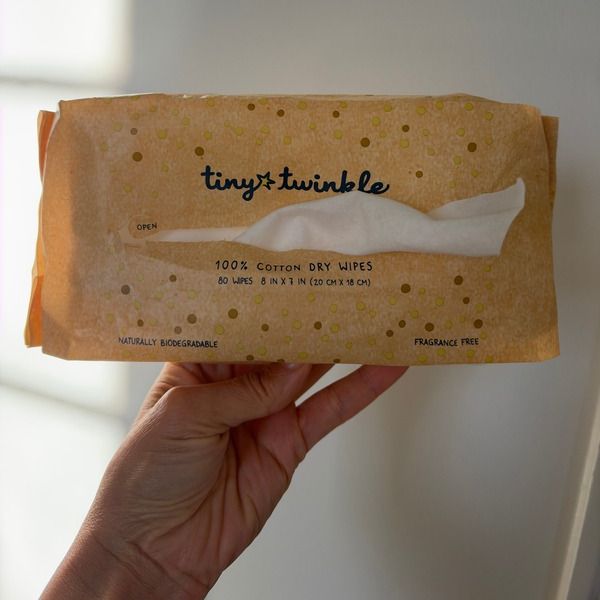
Tiny Twinkle’s dry wipes are 100% cotton and fragrance-free, sold in a 480-count pack. They’re a solid middle ground on price, and they’re designed to be used wet or dry. The company shows an Oeko-Tex certification, which is great, and I do love the size of these packs. They are smaller than Whoopsie Wipes, which I found to help since the pack doesn’t feel so overwhelming in your diaper bag or in the car.
As far as thickness goes, they are on par with Whoopsie Wipes, on the thinner side. I would routinely use 2-3 of these per diaper change.
Whoopsie Wipes
Best for: the lowest cost per wipe in 100% cotton.
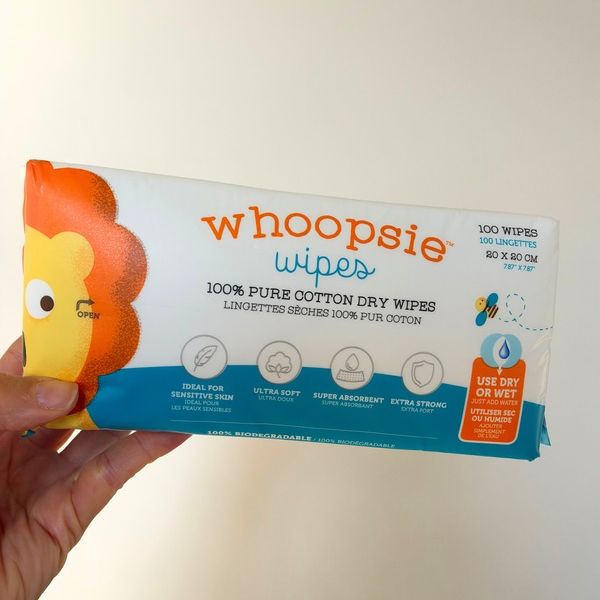
Whoopsie Wipes are one of the most popular dry wipes on Amazon. They’re 100% cotton, unscented, and sized at roughly 7.9 inches square, which works well for diaper changes and faces alike. The big draw is value: at around 6 cents a wipe for the 600-count pack, they’re one of the most affordable ways to switch to cotton dry wipes. The disadvantage is that they’re definitely on the thin side; I consistently needed 2-3 wipes per diaper change when I was using Whoopsie Wipes.
My bottom line on dry baby wipes
I prefer a thick 100% cotton dry wipe because it gives me the simplest, most flexible setup: plain water for diaper changes, a dry corner for patting, and the same pack for all the little messes that happen between changes.
But you do not have to make this an all-or-nothing decision. Choose organic if that matters most to you, choose a budget multipack if you are testing the idea, or keep dry wipes at home and wet wipes in the diaper bag.
Have you tried dry wipes yet? Tell me which ones you used and whether you found them easier or more annoying than regular wipes. I genuinely want to know.
FAQs about dry baby wipes
In case you were wondering, here are some of the frequently asked questions I get about dry baby wipes.
Are dry wipes safe for newborns?
Yes. A plain, soft 100% cotton dry wipe moistened with clean warm water is a simple option for a healthy full-term newborn. Wipe gently from front to back and pat the skin dry before putting on the next diaper. If your baby was a preemie, has broken skin, recently had surgery, or has been given a specific skin-care routine, follow your medical team’s instructions.
How do you use dry baby wipes?
Pull out the wipes you expect to need before opening the diaper. Wet one with clean water from the sink, a spray bottle, or a peri bottle, then use it the same way you would use a regular wet wipe. Use enough water for the wipe to glide without rubbing. Fold the wipe to a clean section as you go, then use a dry corner or a fresh wipe to pat away any remaining moisture.
Can you use dry wipes without water?
Absolutely! Yes, for catching spit-up, wiping drool, cleaning a small dry mess, or patting the diaper area dry. For poop or anything sticky, wet the wipe first so it does not drag across your baby’s skin.
Is water enough for diaper changes?
For many routine diaper changes, yes. Plain water and a soft wipe can clean the skin without adding a cleansing formula. For sticky poop, use more water rather than more friction. A spray or peri bottle can help loosen the mess before you wipe. The American Academy of Pediatrics also suggests rinsing with water when irritated skin would be painful to rub.
Can I pre-wet a whole package of dry wipes?
I would not. Dry wipes do not contain the preservation system used in manufactured wet wipes, so adding water to the entire package and leaving it at room temperature can create an environment where microbes may grow. Wet only the wipes you plan to use during the immediate diaper change. It takes a few extra seconds, but it keeps the routine simple and avoids turning your dry wipes into an unpreserved package of wet wipes.
How many dry wipes do you need?
A thick dry wipe can often handle a routine diaper change in one or two wipes. With thinner options, I routinely needed two or three (if not more), and a blowout may require more no matter which wipe you choose. A 300- to 400-count supply is a practical starting point. Once you know how many you use per change, you can decide whether buying a larger case makes sense.
Are dry wipes cheaper than wet wipes?
They can be, but compare the cost per diaper change rather than only the price per wipe. A cheap, thin wipe may not save money if you need three or four of them to do the job. A thicker wipe may cost more by the sheet but less per change if you can clean effectively with one or two. It can also replace tissues or paper towels for spit-up, drool, runny noses, and other everyday messes.
Are dry baby wipes biodegradable?
It depends on what the wipe is made from. A 100% cotton wipe may biodegrade under the right conditions, while a wipe containing polyester or another synthetic fiber will behave differently. “Biodegradable” does not mean the wipe will disappear quickly in a landfill, and it never means the wipe is safe to flush. Check the material disclosure rather than relying only on the claim printed on the front of the package.
Can you flush dry baby wipes?
No. Put disposable dry wipes in the trash, even when they are made from cotton or marketed as biodegradable. Wipes can clog household plumbing and contribute to larger sewer blockages.