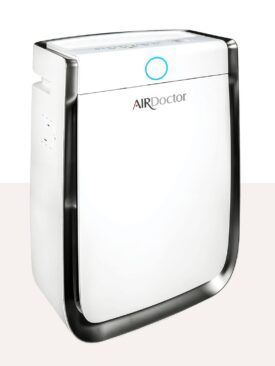
You slide your brand-new Austin Air purifier out of the box and there are some dark smudges on the side of it. Not a scratch or a scuff, but actual black spots, and you’re wondering if it’s dirty or something rubbed off.
I have good news for you! That’s just carbon dust and it’s harmless. It comes off in about thirty seconds, and it doesn’t mean your unit is used, damaged, or defective. I’ve wiped it off my own before, so let me explain why it happens and show you how to clean it.
What the Black Spots Actually Are
Inside every Austin Air unit is a thick filter packed with activated carbon… and a lot of it. The standard HealthMate carries around 15 pounds of a coconut-shell carbon and zeolite blend. That carbon is what pulls chemicals, smoke, gases, and odors out of your air and it’s a big part of why Austin Air purifiers work as well as they do.
Here’s the thing about carbon that fine and that densely packed: a little of it comes loose. When the box gets moved around in transit some of that powder shakes free from the filter inside and settles onto the outside of the unit. Coconut-shell carbon reads as black. If yours looks more purple or gray, that’s the zeolite. (Same story, but a different mineral.)
Skip the Research… It's Already Been Done
12+ years of label-reading, testing, and returns — these products earned their place on my Amazon store.
Shop My Amazon PicksSo it’s not grime, dirt, or some mystery residue, and it’s not a sign anyone used it before you. It’s a bit of the filter’s own carbon that simply migrated during the trip. It happens across basically every carbon-based air purifier brand.
None of it affects how the machine works. The carbon that matters is still sealed inside doing its job. What ended up on the outside is just cosmetic and can easily be cleaned off the Austin Air units.
How to Clean It Off
The good news is this is one of the easiest fixes you’ll do all week. Unplug your Austin Air unit first, always.
Step one: wipe it down with rubbing alcohol
Put a small amount of rubbing alcohol on a soft microfiber cloth and wipe the marks. The carbon lifts right off and the unit goes back to looking exactly the way it left the factory. Alcohol is preferred here because it evaporates clean and doesn’t leave anything behind on the surface, which matters when the whole point of the machine is keeping junk out of your air.
Go with the flat surfaces and the powder-coated steel. Don’t soak the intake screen or push the cloth into the vents; you just want to wipe the smudges off the body of the air filter.
Step two: tackle stubborn spots with a magic eraser
If a mark doesn’t want to budge, a magic eraser will get it. There are two things you should know: (1) use it damp with plain water, not cleaning spray; a magic eraser is basically a super-fine abrasive, so water is all it needs. (2) go light. Austin Air’s own guidance is to skip harsh chemicals and heavy scrubbing on the exterior, because the last thing you want is to dull that baked-on finish or introduce anything that could offgas into the air you’re trying to clean. A gentle pass is plenty. Save this one for the spots the alcohol didn’t fully catch.
What I’d skip entirely: bleach, all-purpose sprays, anything scented or “disinfecting.” You bought a non-toxic machine on purpose. There’s no reason to wipe it down with the exact stuff you’re trying to filter out.
That’s it!
After cleaning your unit, your air filter is good and ready to start tackling your indoor air quality.
Want to Save This Post?
Note: If you unboxed yours and it looked worse than a few smudges (i.e. it’s dented, cracked, or actually broken), Austin Air’s warranty and 30-day guarantee have you covered there. But if it’s just dark marks, you can simply wipe it down as instructed here and plug it right in. If you purchased your unit through Gentle Nursery, please contact our support team here.
Related:
- Why I Love Austin Air Filters for a Cleaner, Healthier Home
- Master List: Air & Water Quality for a Healthier Home
Shop Austin Air: