If you’re wondering how to use red light therapy at home, the secret is matching the device to the job: a red light mask for your face, a wearable wrap for bigger areas like your belly, and a panel or handheld device for sore muscles and anywhere else that needs a little attention. Use it consistently for at least 8 to 12 weeks and protect your eyes, and you’ll give yourself the best shot at real results, especially for your skin, which is where the research is strongest.
I have been using red light therapy for several years now and I’m so excited to finally share my routine with you, because this is one wellness trend that has truly earned its spot in my life! I started using red light (and other colors, too) at the sauna studio I went to for a few years, and then gradually started buying devices for at-home use because I couldn’t always make it in to the studio. Now, my red light face mask is part of my skincare routine, my belly wrap goes around my stomach or gets used for larger coverage areas, and my handheld comes out for anything else that needs a little extra love, for me and for my family. And the change in my skin texture has been huge.
If red light keeps popping up in your feed, you’re probably wondering whether it’s real science or just a really pretty glowing trend. I’m the mom who reads the study before she buys the gadget, so I dug into the research for you.
In this guide, I’ll walk you through exactly how I use each device, what I’ve noticed, what the research says (and where it’s still thin), and how to use red light safely in a house full of kids. It isn’t magic, and it won’t replace sleep, real food, or your doctor. But used the right way, it’s one of the easiest, calmest rituals you can add to your day.
Short on time? I’ve got you.
I’ve already read the labels, so you don’t have to. Everything on my Amazon store is a pick I’d feel good recommending to a friend.
Shop My Amazon Picks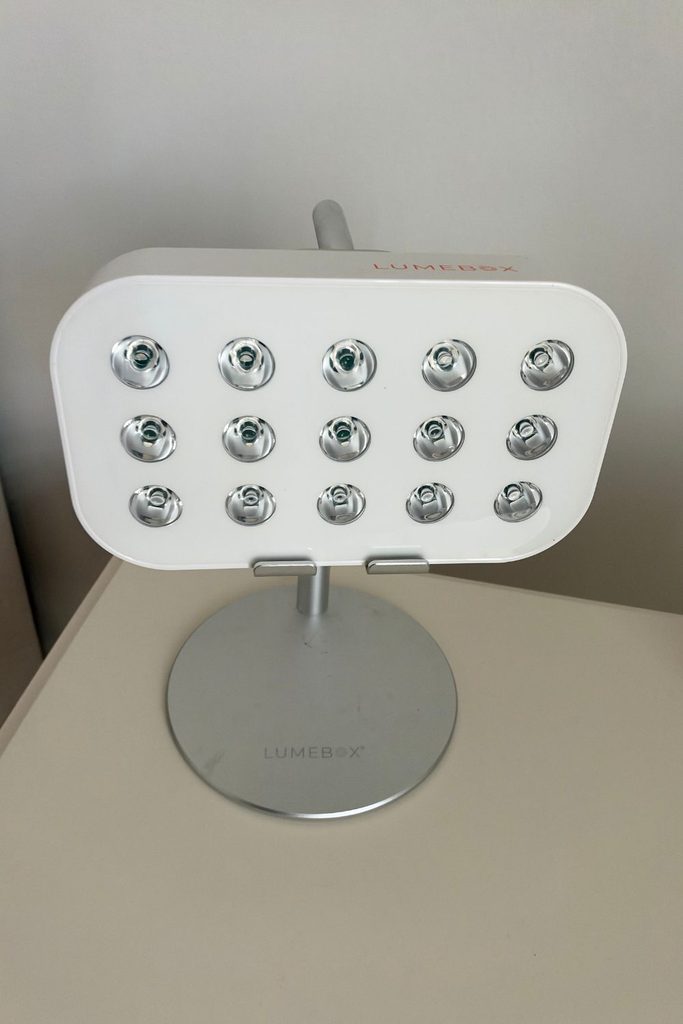
What exactly is red light therapy?
Red light therapy, also called photobiomodulation, uses specific wavelengths of red light (roughly 630 to 670 nanometers) and near-infrared light (roughly 810 to 850 nanometers). Unlike sunlight or a tanning bed, there’s no UV involved, so it won’t burn or tan your skin.
The leading theory is that these wavelengths are absorbed by an enzyme inside your mitochondria, the tiny energy factories in your cells. Researchers believe that light helps your cells make energy more efficiently, which may support repair and calm inflammation. Visible red light works mostly at the level of your skin, while near-infrared light travels deeper into muscle and tissue. That difference matters a lot when you’re deciding which device to use for what.
What are the benefits of red light therapy?
Red light therapy gets credited with a lot online, so I want to walk you through where the research is strong, where it’s promising, and where it’s still pretty thin.
Smoother, healthier-looking skin: Skin is where red light has the best evidence by far. In a randomized controlled trial of 136 volunteers, people who used red and near-infrared light twice a week for 30 sessions had smoother skin, a better complexion, and measurably higher collagen density compared with a group that wasn’t treated. Collagen is the protein that keeps skin firm and plump, and it naturally declines as we get older, which is why this finding gets so much attention. The results built over about 15 weeks, so patience is part of the deal.
Muscle recovery and everyday aches: Near-infrared light reaches deeper tissue, which is why so many people use it on tight shoulders, sore backs, and tired muscles. The research here is encouraging but still young. A 2025 review of 14 studies found that red and near-infrared light eased post-workout muscle soreness at some points in recovery, though the authors noted that only a handful of studies were strong enough to combine and that more research is needed. I think of it as comfort and recovery support, and I’d never use it in place of seeing someone for an actual injury.
Calmer inflammation and healing: Much of the early interest in red light came from wound healing and pain relief. A review of how red light affects inflammation describes how it can help calm inflammatory signaling in the body, and much of that work started in animal studies before moving to people. It’s a big part of why red light is used in clinics, but at-home devices vary so much that I’d keep your expectations realistic.
Body contouring, with an honest asterisk: You’ve probably seen ads claiming red light melts belly fat. There is real research here, but it’s more modest than the marketing. In one double-blind, sham-controlled trial, people treated with 635nm low-level laser three times a week for two weeks lost about an inch off their waist measurement compared with a fake treatment, and a later study found similar results with weekly sessions over six weeks. Those studies used clinical lasers and measured inches on a tape measure rather than body fat or weight, so I’d call it a nice extra rather than a weight-loss plan.
Red light isn’t a cure-all, either. I haven’t found good research showing that it helps your body fight off a cold or the flu, so I don’t treat it that way.
How I personally use red light therapy at home
I don’t use one device for everything, because each kind of light and each shape of device is good at something different. My routine has come together around three of them, and each has its own job and purpose in my life.
My face gets the Mito Red Light mask, and if I could only keep one device for beauty purposes, it would be this one. It’s FDA cleared for wrinkles, it hovers just above your skin instead of pressing against it, and it has eye protection built in, so you can lie back and relax while it works. The change in my skin texture has been huge, and it has been one of the most impactful additions to my beauty and wellness routine. If you’re cleaning up your skincare at the same time, here’s how I swapped my routine for safer products.
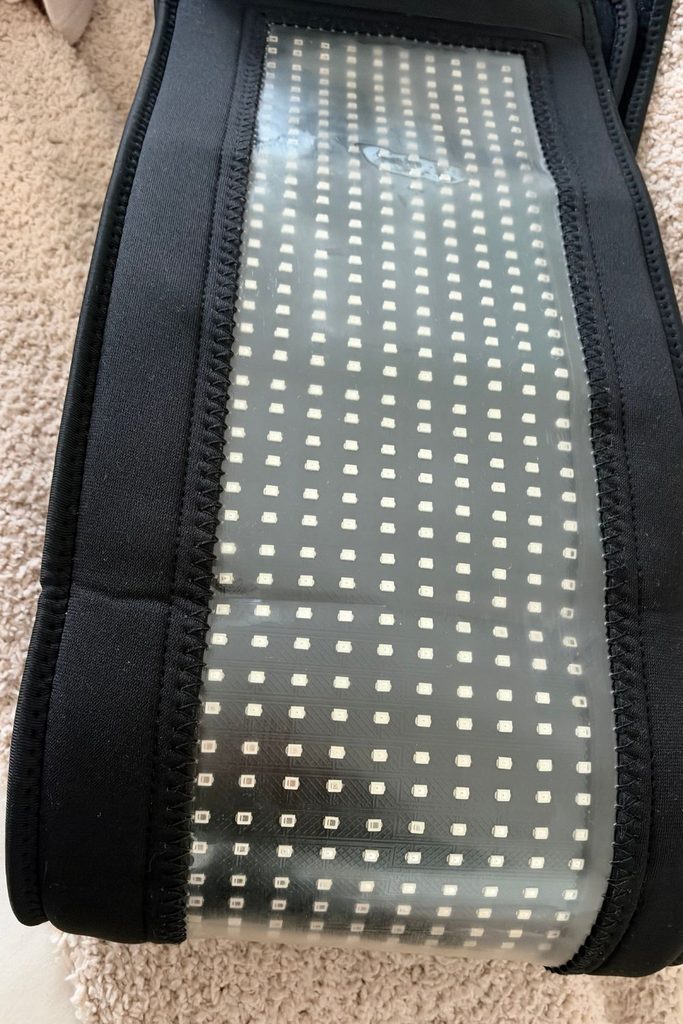
Around my stomach, I wear a Nushape wrap. I usually use this while standing on my vibration plate, but this one gets pulled out a little less frequently right now (new baby and all). It’s a soft band lined with red and near-infrared lights that straps on, so I can keep working or sit with a little one while I use it, although it does get a little bulky when trying to hold the baby. It feels like it helps me stay trim, and I love that it’s hands-free. Knowing what the research says, I see it as a small extra on top of the basics like movement, protein, and sleep, not a shortcut.
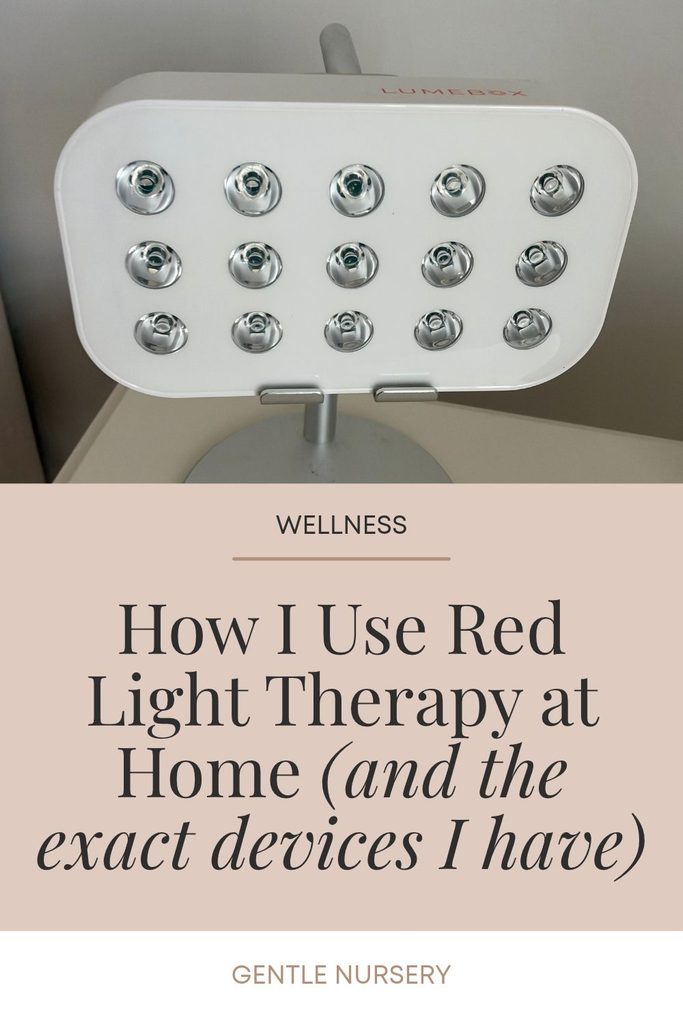
Then there’s my Lumebox, which is the most flexible of the three. It’s a portable, handheld device with both red and near-infrared light, so it comes out for anywhere on my body that needs a little attention, whether that’s a stiff neck from feeding and rocking or a sore back after a long day. (This is my most-used device! My discount applies automatically through that link, so there’s no code to remember.)
I use the Lumebox like a panel, although it is considerably smaller than some of the larger panels out there. It also comes out when someone in my family is feeling under the weather or complaining about sore muscles. For us, it’s part of a cozy “let’s take care of you” routine along with rest, fluids, and a warm bath, and I think of it as comfort and support rather than medicine. NOTE: If you’re thinking about using red light on your kids, talk to your pediatrician first, especially for babies and toddlers, and keep the light well away from their eyes.
How to use red light therapy safely
Red light is gentle, but it still deserves some caution. The most important habit is protecting your eyes. Bright light shining directly into the eye can be risky for the retina, so never stare into the LEDs, wear the goggles that come with handheld devices, or choose a mask with built-in eye protection.
A Cleveland Clinic dermatologist also recommends skipping red light if you have a photosensitive disorder, meaning you blister or burn easily in the sun. If you take a medication that makes you sensitive to light or have a history of skin cancer, check with your doctor or dermatologist before you start. The same goes for pregnancy, since there’s very little research on red light while you’re expecting. And if you’re postpartum and still healing from a C-section or stitches, wait until your provider gives you the okay before using red light anywhere near that area.
Finally, more isn’t better. Follow the timing your device recommends. Longer sessions won’t get you results faster, and too much can actually irritate your skin.
There’s a device for everything
If you want to start your own red light therapy routine, the good news is that you don’t need three devices to get started; I’ve accumulated these over several years because I have committed to using red light therapy as part of my own routine. Pick the one goal that matters most to you right now. If it’s your skin, start with a mask. If it’s sore muscles or a little of everything, a handheld device is the most flexible place to begin. Look for a brand that clearly lists its wavelengths, ideally red in the 630 to 670 nanometer range and near-infrared around 810 to 850, and check whether it’s HSA or FSA eligible, since many devices are.
There is a big difference in quality on some of these devices… Before you buy, look for these:
- Listed wavelengths. Look for red in the 630 to 670nm range and near-infrared around 810 to 850nm. If a brand won’t tell you its wavelengths, skip it.
- Testing and clearance. Third-party testing for power output is a good sign. For face masks, FDA clearance for wrinkles is worth looking for, like the Mito face mask.
- The right shape for the job. A mask is easiest for your face, a wrap is easiest for a larger area like your belly, and a handheld device is the most flexible. However, there are even devices that you can use in every way you can possibly think of, like nasal red light devices, face wands, hair restoration caps, and more. I have a few of these listed here on my Amazon store.
- HSA or FSA eligibility. Many devices qualify, which can take some of the sting out of the price.
Want to dive a little deeper into some of the trusted red light therapy brands? Here are a few I have worked with for a long time and trust and can recommend with confidence:
Find the devices that work for you and work toward your goals, and give it a real chance. Try habit-stacking your sessions by pairing red light therapy time with something you already do every day, like washing your face at night, and stick with it for 8 to 12 weeks. A quick daylight photo every couple of weeks will show you changes you’d never notice in the mirror.
For more ways to take care of yourself in the thick of it, here are 15 realistic self-care ideas for exhausted new moms. Red light therapy won’t do the work of sleep, food, and time, but if you’re looking for one small, calm ritual that’s just for you, it’s one of my favorites.