
Swimming is what childhood is made of, at least in my mind. Growing up in Southern California, we spent whole days splashing around, and not just in summer. Pool season was basically year-round. Now I get to watch my own kids fall in love with it, and honestly, those long, waterlogged, happy-exhausted days are some of my favorites.
But if you’re anything like me, you’ve probably found yourself wondering about all that chlorine. It does an important job (it keeps pools clean and germ-free, blah blah blah), but it’s also a strong chemical, and the exposure adds up when your kids are in the water often.
Research has linked repeated pool exposure to effects on kids’ skin barrier and, in some studies, their respiratory health, mostly from chloramines, the irritating compounds that form when chlorine mixes with sweat and other stuff swimmers bring in.
Here’s what I want you to hear first, though: this isn’t a reason to keep your kids out of the pool.
Skip the Research… It's Already Been Done
12+ years of label-reading, testing, and returns — these products earned their place on my Amazon store.
Shop My Amazon PicksIt’s just a reason to build in a few simple habits to your pool time. The good news is that helping their little bodies bounce back from chlorine is genuinely easy. Here are 15 of my tried-and-true favorites.
Quick note: I’m not a medical professional and this isn’t medical advice. Always check with your healthcare provider before making changes to your or your child’s routine.
1. Spritz on a vitamin C spray
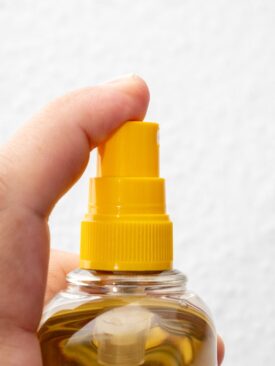
This is my number-one trick. Vitamin C actually neutralizes chlorine on contact; ascorbic acid is a reducing agent that converts chlorine and chloramines on the skin into harmless compounds almost instantly. You can buy or make your own swim spray very easily, by dissolving about a teaspoon of vitamin C powder (ascorbic acid or the gentler sodium ascorbate) into a cup of water in a small spray bottle. Mist it over your kids’ skin before swimming and as soon as they hop out of the pool. If your child has sensitive skin, go with sodium ascorbate because it’s less acidic. (Full recipe for swim spray here.)
2. Rinse off immediately
The simplest thing you can do is not let chlorine sit on their skin. A quick rinse with fresh water right after swimming makes a real difference. If there’s an outdoor shower at the pool, use it, and if not, get them rinsed the moment you’re home.
3. Use a gentle cleanser
Chlorine is drying and can leave sensitive skin tight and irritated. A gentle, non-toxic cleanser rinses off the lingering residue without stripping their skin barrier further. I still reach for baby shampoos and body washes even as my kids get older, just because they’re usually made without harsh surfactants or synthetic fragrance.
4. Moisturize while they’re still damp
Chlorine pulls moisture right out of the skin, so replenishing it matters. Lock hydration in with a nourishing lotion or a natural oil (after showering) while their skin is still a little damp. Coconut oil, sweet almond oil, and tallow balm are all lovely options; tallow especially is my go-to for kids who get dry and flaky after a lot of swimming.
5. Keep aloe vera gel on hand
If their skin comes out looking pink, dry, or a little angry, pure aloe vera gel is wonderfully calming. It’s cooling, hydrating, and soothing, which is exactly what irritated post-pool skin is asking for. I keep a bottle in the fridge because cold aloe on a hot afternoon is next-level soothing.
6. Try an Epsom salt bath
A warm Epsom salt bath is a cozy way to end a pool day. Add Epsom salts (and any other ingredients of choice) to their bath water and let your child soak for 15 to 20 minutes. The magnesium is relaxing for tired little muscles, and the soak helps rinse away anything still clinging to their skin. Bonus: it tends to make bedtime a whole lot smoother.
7. Pre-swim coconut oil for hair
A thin layer of coconut oil worked through the hair before swimming creates a barrier that helps keep chlorine from soaking in. It won’t block everything, but it noticeably cuts down on that dried-out, straw-like feeling. Afterward, shampoo gently and add a little oil or conditioner back in to rehydrate.
8. Consider a swim cap
If your child is in the water a lot, a swim cap is the most effective way to protect their hair, full stop. Is it the most stylish look? No. Would my kids wear one? Also no. Does it work? Absolutely. Pair it with the coconut oil trick above for kids with long or color-treated hair, or hair that’s just prone to damage.
9. Hydrate, hydrate, hydrate
Swimming, sun, and chlorine all pull water out of the body faster than you’d think. Offer plenty of filtered water before, during, and after pool time. Letting your kids pick out a fun, non-toxic water bottle makes this weirdly easy… suddenly drinking water becomes exciting.
10. Blend up a green smoothie
Feeding your kids nutrient-dense greens supports their body’s own natural detox pathways. Spinach, cucumber, kale, and parsley are great; blend with banana, green apple, or pineapple for sweetness and they’ll slurp it down without a second thought. It’s an easy win on a lazy pool day when nobody wants a real meal anyway. Another good option is the Medical Medium Detox Smoothie; if you’re in Los Angeles, you can grab one from the Erewhon smoothie bar.
11. Load up on antioxidants
Chlorine exposure can bump up oxidative stress in the body, and antioxidant-rich foods help balance that out. Think berries, broccoli, tomatoes, and citrus. Smoothies, popsicles made from real fruit, and colorful veggie plates are all sneaky-good ways to get them in. (If your kids don’t naturally reach for veggies, try just chopping some up and leaving a platter on the counter. Don’t offer them or remind them to eat from this plate. This mom-psychology trick usually works!)
12. Support their gut with probiotics
Chlorine is designed to kill bacteria, and if your kids swallow a fair amount of pool water (and let’s be real, they do), frequent swimming can nudge their gut balance off. A daily probiotic or probiotic-rich foods like yogurt, kefir, or fermented veggies help keep their good bacteria thriving.
13. Cover up instead of relying on sunscreen
I’ll be honest with you, I’m not a slather-them-in-sunscreen mom. I believe in healthy sun exposure and when necessary, lean on physical protection first: long-sleeved rash guards, a swim hat, an umbrella or shade tent, and simply timing our longest pool sessions outside of peak midday sun. It works beautifully and keeps things simple. If you do want a sunscreen for the exposed bits, I’d reach for a clean mineral sunscreen one over a chemical formula, but for us, smart sun exposure does most of the heavy lifting.
14. Build in real rest afterward
Swimming is genuinely hard work, even when it looks like pure play. All that sun and movement takes a lot out of a little body. Make space for quiet after the pool like snuggles, a stack of books, or a good long nap so they can actually reset and recover. As my kids have gotten older, I’ve seen a lot of kids run from the pool straight to sports, practice, baseball games, etc. That is something I prefer to avoid. Swimming is just too overwhelming and draining to do before any high-exertion activities.
15. Watch for signs of overexposure
Keep a gentle eye out for red eyes, an itchy rash, or a lingering cough. If your child seems to react strongly or often, it’s worth a chat with your pediatrician. And if chlorine is a recurring struggle for your family, a saltwater pool is a much gentler alternative when you have the option.
Final Thoughts
There’s really no need to stress over every single swim. But it’s completely okay (smart, even) to be a little mindful about chlorine, especially if your kids are in the water all the time. A few small habits are all it takes to help their bodies bounce back and keep pool days feeling as carefree as they should.
Here’s to sunny days, cannonballs, and chlorine detox made easy.











Leave a Reply