
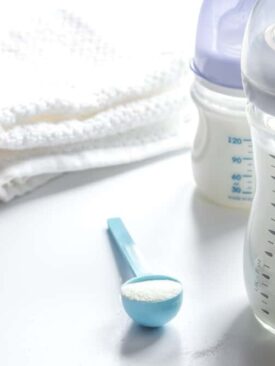
Whether you’re supplementing, planning to have only formula on hand as a backup, or exclusively formula feeding, it’s important to select the healthiest baby formula for your little one. This means looking into the nutritional content of these organic, non-GMO baby formulas and making an informed decision based on what’s important to you.
- My top picks for organic baby formula
- How to choose the healthiest formula for your baby
- Ingredients to avoid in baby formula (quick chart)
- What types of baby formula are available?
- The best organic baby formulas
- Other notable options
- What’s changed in the formula world (and why ByHeart is no longer on this list)
- FAQs about organic baby formula
And, it’s worth mentioning that while there are many high-quality organic baby formulas out there, there is no “perfect” baby formula out there. Finding what works for your baby may take a little trial and error. But I highly recommend the organic baby formula brands listed here because they’re made with healthier ingredients than conventional formulas, making them a better choice.
The formula world changed a lot this past year, and one brand I used to recommend is no longer on this list. Below are the organic formulas I’d buy now, the ingredients I’d skip, and how to choose between cow’s milk, goat milk, and A2 options without second-guessing yourself.
Short on time? I’ve got you.
I’ve already read the labels, so you don’t have to. Everything on my Amazon store is a pick I’d feel good recommending to a friend.
Shop My Amazon PicksHere’s what’s different since I first wrote this guide. Two organic whole milk formulas were recalled after infant botulism outbreaks, a few European brands disappeared, far more American organic formula brands have surfaced, and independent labs have started publishing heavy metal test results by brand. I’ve gone through every formula on this list again, removed the ones I can no longer recommend, and added a few new ones worth knowing about. So, how exactly do you choose the best organic baby formula for your baby? Let’s go over the details.
My top picks for organic baby formula
First, take a look at some of my top choices:
- Best overall organic baby formula: Bobbie Organic Whole Milk gets my vote. It’s made in the USA with organic grass-fed whole milk and Bobbie formulas have consistently been among the cleanest in Consumer Reports’ heavy metal testing.
- Best European baby formula: Kendamil Organic is my top choice for a European formula made with whole cow’s milk, and you can grab it at Target.
- Best organic goat milk formula: Jovie is made with whole organic goat’s milk and is my top pick for goat milk formula. If you’d rather buy goat formula in a store, Kendamil Goat is a great option at Target.
- Best in-store organic baby formula: If you’re shopping in-store or need to grab something quickly, I recommend Bobbie or Kendamil from Target. Another alternative is Happy Baby Organics.
- Best A2 organic formula: I love Holle Organic A2 or the newer HappyBaby Organics A2, which is sold as a US infant formula.
| Formula | Best for | Pros | View Details |
|---|
How to choose the healthiest formula for your baby
First, I want you to know that there is no such thing as the perfect baby formula, organic or not. Breast milk is far superior to anything else, and if you are in a position to breastfeed, I would encourage you to do so, even partially. Your baby gains significant health and safety benefits if you breastfeed even just once a day.
But typically, you’ll find that organic baby formula brands contain far better ingredients than traditional brands. And you’ll also find that European baby formulas are made with higher standards than most American formulas, so some parents order formulas from Europe.
If your little one is going to be on formula, I would encourage you to choose one of the best organic baby formula options that’s within your budget.
What your baby consumes directly impacts their health and well-being. Sadly, traditional formulas made by Enfamil, Gerber, and Similac, among others, contain harmful, unnecessary ingredients, including corn syrup, maltodextrin, and GMOs. Even some organic formulas are made with unnecessary ingredients that aren’t good for a baby’s developing digestive system, so please choose your baby’s formula brand wisely and carefully.
Here’s what I look for on the label and beyond:
- Lactose as the main carbohydrate. Lactose is the sugar naturally found in breast milk. I prefer formulas that skip corn syrup, corn syrup solids, glucose syrup, and maltodextrin, or at least keep them low on the list.
- Whole milk or a simple fat blend. Whole milk formulas get some of their fat from milk itself instead of only from added oils. Many parents also prefer to skip palm oil, which some babies find harder to digest.
- DHA that isn’t hexane-extracted. Look for algal DHA that’s water-extracted, or DHA from egg yolk.
- Real testing transparency. After this past year, I care just as much about how a brand tests its ingredients as I do about the ingredient list. Look for brands that publish heavy metal results, carry the Clean Label Project certification, or post batch testing you can look up by lot code.
- Know whether it’s sold as a US infant formula. The FDA keeps a list of infant formulas marketed in the US. Kendamil, Bobbie, HappyBaby Organics, Earth’s Best, Little Spoon, and Kabrita are on it. HiPP, Holle, and Jovie are not, which means you’d buy them through an importer. Plenty of families do this happily, but it means a label written for European preparation, sometimes different iron levels, and recall notices that may not reach you the way US recalls do.
Ingredients to avoid in baby formula (quick chart)
Screenshot this one for your next trip to the store. These are the ingredients I check for first when I flip a can of formula over.
| Ingredient | Why I skip it | Look for this instead |
|---|---|---|
| Corn syrup, corn syrup solids, glucose syrup | A cheaper sugar used in place of lactose, the carbohydrate naturally found in breast milk. | Lactose listed as the main (or only) carbohydrate |
| Maltodextrin | A processed starch, usually from corn, used as filler carbohydrate. | Lactose-based formulas |
| Sucrose (table sugar) | Added sugar a baby doesn’t need. Europe limits it in standard infant formula. | No added sucrose on the label |
| Palm oil or palm olein | Some research links it to lower calcium absorption and firmer stools. | Whole milk fat, or blends of sunflower, coconut, and rapeseed oil |
| Hexane-extracted DHA and ARA | Hexane is a chemical solvent used to pull the oil out. | Algal DHA that’s water-extracted, or DHA from egg yolk |
| Carrageenan | A seaweed-based thickener some parents prefer to skip for sensitive tummies. Many European formulas leave it out. | Formulas without added thickeners |
| GMO ingredients | Conventional formulas often use GMO corn and soy ingredients. | USDA Organic or EU Organic certification |
One ingredient on this list doesn’t make a formula unsafe, and every baby is different. If your little one needs a specialty formula for allergies, reflux, or another medical reason, follow your pediatrician’s guidance first.
What types of baby formula are available?
Even though you know you want an organic baby formula, it’s important first to narrow down the type of formula you want to use. Your choices for baby formula boil down to the following:
- Cow’s milk formula: Dairy-based formula is the most common type of formula given to babies, although dairy can cause gas and fussiness in many babies that are intolerant to milk proteins. Several organic cow’s milk formulas are on the market today, giving you many options.
- Goat milk formula: While cow’s milk can cause inflammation in the body, goat’s milk is less allergenic and much more easily digested. Goat’s milk formulas are a great alternative to dairy-based formulas, but they are typically not recommended for babies allergic to dairy. They may work fine for babies displaying a “sensitivity” to cow’s milk proteins. Several great goat milk formulas are available, including Kabrita, which I would also encourage you to consider.
- Soy-based formula: An alternative to cow’s milk, soy-based formula is another option, especially if you want a plant-based or vegan baby formula. However, unless your soy-based formula is organic, you can assume the soy is GMO, which is not recommended. In addition, it’s best to avoid soy in general because it contains phytoestrogens (there is a debate on this, but I prefer to avoid soy in an abundance of caution). I don’t recommend soy-based formula for babies, assuming other viable options are available, but remember… fed is necessary.
- Hypoallergenic baby formula: Hypoallergenic formula is for babies with milk and/or soy-protein allergies and contains highly broken-down milk proteins which are easier for babies to tolerate. Check out our full guide to the best hypoallergenic formulas.
Other options you may hear about:
- Homemade baby formula: I’ll be honest, I considered making my own at one point. But I don’t trust myself to get every nutrient right, and the FDA advises against homemade formula after babies were hospitalized with low calcium from homemade recipes. The American Academy of Pediatrics also advises against it. If you’re drawn to homemade formula because you want simple, whole-food ingredients, one of the whole milk formulas below will get you much of the way there.
- Toddler formula: Toddler formulas are made for children over 12 months and aren’t reviewed by the FDA the way infant formulas are, so the CDC recommends choosing a formula that isn’t labeled for toddlers for babies under 1. If you love a toddler formula like Serenity Kids, it’s a great choice once your baby turns 1. Before then, please stick with an infant formula and talk with your baby’s pediatrician if you’re having trouble finding one that works.
The best organic baby formulas
As I said above, there is no perfect option for buying baby formula. But here are some of the best organic baby formula brands currently available. Please thoroughly review this list, weigh the pros and cons, and decide on the best formula for your family.
1. Bobbie Organic Infant Formula

Best for: parents who want a clean, US-made organic formula they can buy at Target without importing.
Buy on Bobbie | Target | Walmart
Made in the USA, Bobbie is a European-style baby formula that meets FDA requirements and is USDA organic. This makes Bobbie a very accessible baby formula brand for parents in the US. Bobbie now makes four formulas: Organic Original, Organic Gentle (with partially broken-down proteins for fussy tummies), Organic Whole Milk, and a non-organic Grass-Fed Whole Milk.
This organic baby formula is promising not only because it doesn’t contain palm oil (which is difficult for an infant’s digestion), but it also doesn’t contain maltodextrin or corn syrup. Bobbie’s first ingredient listed is organic lactose. The Organic Whole Milk formula is my favorite of the bunch, since it’s made with organic grass-fed whole milk from New Zealand, so more of the fat comes from milk and less from added oils. The DHA is water-extracted, making it much safer than mainstream brands that use hexane extraction.
Older versions of Bobbie used organic soybean oil, and I used to call that its only downside. Bobbie now markets its formulas as having no soy fat blend, but check the allergen line on the can if you’re avoiding soy completely, since it can vary by formula and can size. Bobbie also did beautifully in Consumer Reports’ testing: its formulas had among the lowest heavy metal levels in both the 2025 and 2026 rounds, with no detectable lead in the Organic Whole Milk formula. And it’s Clean Label Project certified.
Also, I love that Bobbie was founded by moms who wanted the best and most complete nutrition for their babies. Because let’s be honest, most mainstream baby formula on the market doesn’t meet your baby’s nutrition needs in an ideal way. You can read all of the pros and cons in our Bobbie formula review!
2. Kendamil Organic Baby Formula

Best for: parents who want a European, whole milk formula without having to import it.
Buy on Target | Organic’s Best
Kendamil is an organic baby formula brand made in the UK with some of the highest ingredient and manufacturing standards. Made with whole milk (not just skim milk) from cows that graze on the pastures of local farms, Kendamil is manufactured to British and European organic standards, including no GMOs, pesticides, or use of hormones or antibiotics. It has no palm oil, added soy, or corn syrup, and the US version includes HMOs and GOS prebiotics.
Kendamil sources its Omega-3 DHA from plant-based pure marine algae, making Kendamil a good choice for babies with fish or shellfish allergies. Even better, Kendamil has now completed the FDA review for permanent status in the US, so you don’t have to worry about it disappearing from shelves the way some European brands have. New cans also carry the Clean Label Project certification.
In Consumer Reports’ 2025 testing, Kendamil Organic had low but detectable levels of arsenic and lead (2.8 and 3.1 parts per billion), a little higher than Bobbie but still very low. For more info, see our full Kendamil review.
In the US, Kendamil Organic is sold as one infant formula for birth to 12 months. If you’re buying through a European importer instead, Kendamil is available in three stages:
- Kendamil Stage 1 (0 to 6 months)
- Kendamil Stage 2 (6+ months)
- Kendamil Stage 3 (12+ months)
3. Little Spoon Organic Grass-Fed Whole Milk Infant Formula
Best for: parents who want to see batch-by-batch test results before they buy.
Buy on Little Spoon
Little Spoon is a newer formula, and I’m including it because of how seriously it takes testing. It’s made in the USA with organic grass-fed whole milk from New Zealand that’s certified to both EU and USDA organic standards, and it includes a prebiotic plus DHA and ARA.
What really stands out is the transparency. Little Spoon says it tests every batch for more than 500 contaminants, including heavy metals and pesticides, and you can look up results by lot code. It also voluntarily tests for the type of bacteria linked to botulism risk, which no regulation requires, and that’s exactly the kind of extra step I want to see after this past year. It’s on the FDA’s list of infant formulas marketed in the US.
4. Jovie Organic Goat Milk Formula

Best for: babies with a cow’s milk sensitivity who need an easy-to-digest formula.
Buy on Organic’s Best | Formuland
A European goat milk baby formula, Jovie stands out as a great option for babies who need an easy-to-digest formula or have a cow’s milk sensitivity. Whole organic goat milk and lactose are the main ingredients in this formula, and they pass all of Europe’s stringent standards. It is also free of soy, coconut, palm oil, and maltodextrin, which is exactly what little tummies need if they are having trouble with other formulas.
Unlike many other goat milk formulas, Jovie has added prebiotics, which many parents appreciate for their baby’s digestion. This is one with an excellent nutritional profile with high-quality ingredients, tolerated by many sensitive bellies! Jovie Stage 1 was tested by Consumer Reports in 2026 and had low levels of arsenic and lead. Jovie has also received FDA’s acknowledgment that its dry whole goat milk is safe for infant formula, though Jovie formula itself isn’t on the FDA’s list of formulas marketed in the US yet, so you’ll buy it through an importer.
5. Holle Organic Goat Milk Formula

Best for: families who already trust Holle and want a goat milk version.
Buy on Organic Baby Food 24 | Organic Formula Shop
In addition to their cow’s milk formula, Holle also makes organic goat milk formula for babies using 99% organic ingredients certified to European standards. This formula contains no soy, artificial colors, flavors, or preservatives. Please note that it does contain maltodextrin.
Consumer Reports tested Holle Organic Goat Milk in 2026 and found low levels of arsenic and lead, with a little cadmium (3.3 parts per billion), similar to what it found in Holle’s cow’s milk formula the year before.
Holle organic goat milk formula comes in three stages:
- Stage 1 formula (0 to 6 months)
- Stage 2 formula (6+ months)
- Stage 3 formula (10+ months)
6. Holle Organic A2 Baby Formula
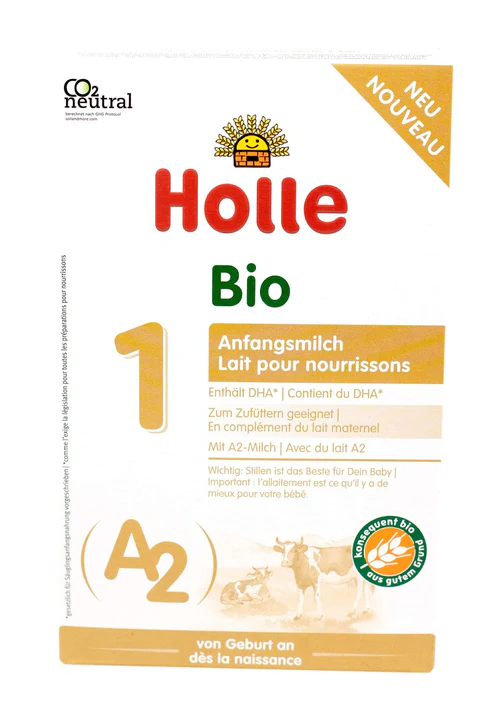
Best for: babies with sensitive tummies whose parents want to try A2 milk.
Buy on Organic’s Best | The Milky Box
Holle’s Organic A2 Infant Formula is a premium quality infant formula designed to provide essential nutrition for babies with A2 milk. As always with Holle products, it is made using organic ingredients sourced from biodynamic farming practices.
Holle Organic A2 Infant Formula is unique as it is made from the milk of cows that naturally produce the A2 beta-casein protein. This protein is believed to be easier to digest compared to the A1 protein found in conventional cow’s milk. It may be a better formula choice for infants with sensitive tummies or digestive issues.
Gentle on little tummies: The A2 protein in this formula may contribute to easier digestion and reduced discomfort for babies with sensitive stomachs. It is formulated to be easily digestible and gentle on delicate digestive systems, promoting better nutrient absorption and overall well-being. Even if your little one isn’t necessarily sensitive, using an A2 formula like Holle’s can be a gentle way to nurture your baby.
Try Holle Organic A2 Infant Formula, a nourishing and thoughtfully crafted formula that supports your baby’s growth, well-being, and digestive comfort. This product is available in three stages:
7. Holle Organic Baby Formula

Best for: parents who want one of the most trusted European organic formulas.
Buy on Organic Baby Food 24 | Organic’s Best | Organic Formula Shop
Made with organic ingredients and with milk from cows raised on Demeter-certified biodynamic farms, Holle is one of the most popular European brands of organic baby formula. Anecdotally speaking, many moms say their baby’s colic symptoms eased up when switching from an American formula to Holle. This is one of the highest-quality organic baby formula brands available.
Consumer Reports tested Holle Bio Organic Stage 1 in 2025, and it had low levels of lead (2.2 parts per billion) and cadmium (3.3 parts per billion), with no detectable arsenic.
Choose between these stages of Holle baby formula:
- Holle PRE (0 to 6 months)
- Holle Bio Stage 1 (0 to 6 months)
- Holle Bio Stage 2 (6+ months)
- Holle Bio Stage 3 (10+ months)
- Holle Bio Stage 4 (12+ months)
8. HiPP Organic Baby Formula

Best for: parents who want a European formula with added probiotics.
Buy on Organic Baby Food 24 | Organic Formula Shop
HiPP is a European brand that ranks high in quality, as well. It contains no gluten, maltodextrin, or soy lecithin. HiPP makes slightly different versions of its organic baby formula for the UK, Germany, and the Netherlands. For example, some contain probiotics and starches while others do not, and the Dutch version comes in a can and has a longer shelf life, while the others are in a box.
HiPP Dutch Organic Stage 1 had no detectable arsenic and low lead in Consumer Reports’ 2025 testing. HiPP has also said its formulas were not affected by the cereulide recalls, because it sources its ARA oil from suppliers that weren’t involved.
HiPP also makes several hypoallergenic formulas. Choose the version that is best for your needs. HiPP comes in three main versions:
- HiPP German: the company’s original formulations; HiPP German includes prebiotic fiber and probiotics
- HiPP Dutch: comes in a can and has a longer shelf life
- HiPP UK: comes in a slightly smaller box than HiPP German formulas
9. Parent’s Choice Organic Whole Milk Infant Formula
Best for: families who want an organic whole milk formula at a lower price.
Buy on Walmart
Walmart’s store brand now makes an organic whole milk formula, and it’s a real step up from their older organic version. It’s made with USDA organic certified and EU organic milk ingredients, and it has no palm oil, added soy, corn syrup, or gluten. It’s also on the FDA’s list of infant formulas marketed in the US, so you can grab it at Walmart instead of ordering through an importer.
Walmart says it’s inspired by the nutrition of Kendamil Organic, and like Kendamil, the whole milk base means some of the fat comes from milk itself. Walmart doesn’t say who manufactures it, and I haven’t seen it in Consumer Reports’ published testing yet, so that’s the one thing I’m watching.
Make sure you pick up the can labeled Organic Whole Milk. Parent’s Choice also sells an older organic formula made with corn syrup solids, maltodextrin, and palm oil.
10. Happy Baby Organic Formula
Best for: parents who want an affordable organic formula they can find almost anywhere.
Buy on Amazon | Target | Walmart
Happy Baby is another good choice for American baby formula because it is easily accessible, certified organic, and contains probiotics and a prebiotic. I know a few families who have really loved it. Happy Baby Organics is on Consumer Reports’ list of lowest-contaminant organic formulas, and it now makes an A2 organic infant formula too, which is a great US-made option if you’ve been importing A2 formula.
Happy Baby comes in the following formulations:
- Stage 1 Organic Infant Formula (0 to 12 months)
- Stage 2 Formula (6 to 12 months)
- Sensitive Formula
- HappyBaby Organics A2 (0 to 12 months)
11. Earth’s Best Organic Infant Formula
Best for: families on a tighter budget who need an organic formula from the grocery store.
Buy on Earth’s Best
Earth’s Best isn’t as clean on paper as the formulas above, and I want to be honest about that. Its formulas use organic palm oil and soy oil, and some versions, like Sensitivity and Gentle, include organic glucose syrup solids or maltodextrin. But the Organic Dairy formula uses lactose as its carbohydrate with no added corn syrup solids, it’s USDA organic, and it’s made in the USA.
Here’s why it earned a spot: Earth’s Best Organic Dairy and Organic Sensitivity are both on Consumer Reports’ list of organic formulas with the lowest contaminant levels. If budget is tight, this is a solid “good” option in a good, better, best lineup.
12. Munchkin Infant Formula Made with Organic Milk
Best for: parents who want a newer US formula made with organic grass-fed milk that’s easy to find in stores.
Buy on Target
Munchkin, the baby gear brand, launched its first infant formula in 2026. The organic version is made with USDA organic milk from grass-fed New Zealand cows, has no corn syrup, and uses hexane-free DHA. It’s on the FDA’s list of infant formulas marketed in the US, and you can pick it up at Target.
It sits lower on my list for a few reasons. It’s made with nonfat milk instead of whole milk, and its oil blend includes a palm-derived oil and soy oil. It’s also too new to show up in Consumer Reports’ published testing. Munchkin sells an “Original Milk” version too, which isn’t organic, so double-check the label before you buy.
13. Serenity Kids A2 Toddler Formula (12+ months)
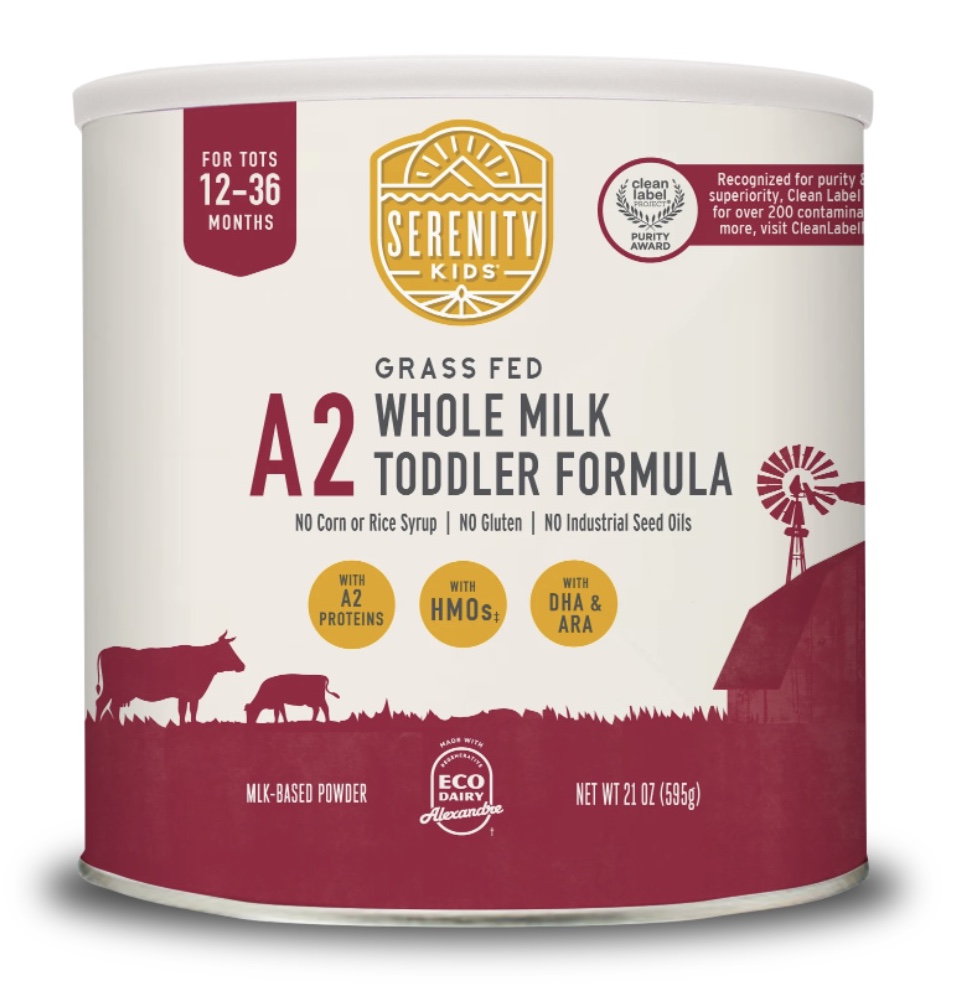
Best for: toddlers over 12 months who need a nutrient-dense formula.
Buy on Serenity Kids | Amazon
Designed for toddlers over 12 months, Serenity Kids Formula offers a grass-fed A2 whole milk formula. This is great for toddlers who need a little nutritional boost alongside a balanced diet of solid foods. Serenity Kids says its formula meets the FDA’s nutrient requirements for infant formula, but it hasn’t gone through the FDA’s infant formula process, so it’s labeled and recommended for 12 months and up only. Please don’t use it for babies under 1.
Like most quality formulas, they exclude soy, rice syrup, corn syrup, maltodextrin, and GMOs, and include all the good stuff (including L-methylfolate instead of synthetic folic acid). They use A2 beta-casein proteins, which are easier to digest than their A1 counterparts, found in most cow’s milk formulas. You will also find organic lactose as the main carbohydrate, important nutrient-rich fats derived from sustainably sourced oils, prebiotics, and probiotics.
They have also received the Purity Award from the Clean Label Project, which gives you added assurance that the product uses safer ingredients for your little one. The whole milk comes from Alexandre Family Farm, a grass-fed organic dairy that was the first American dairy farm certified regenerative by the Savory Institute.
Other notable options
These formulas aren’t certified organic, so they aren’t part of my main list. But they still meet most of the standards I look for, so they’re worth knowing about.
- Kendamil Goat: Made with whole goat milk from European family farms, with no palm oil, added soy, corn syrup, or GMOs. It has permanent FDA status and Clean Label Project certification, and you can pick it up at Target.
- Kabrita: A goat milk formula that’s on the FDA’s list of formulas marketed in the US, so you can buy it without going through an importer.
- Baby’s Only Mehadrin: This is now the only infant formula Baby’s Only makes. It’s Mehadrin kosher certified, uses lactose as its main carbohydrate with no corn syrup solids, and is on the FDA’s list of formulas marketed in the US. A good fit if your family keeps strict kosher.
- Bubs 365 Day Grass Fed: An Australian formula made with whole fat milk from grass-fed cows, with lactose as its carbohydrate. It isn’t organic, but it received permanent FDA authorization in September 2026, so it should stay on US shelves.
What’s changed in the formula world (and why ByHeart is no longer on this list)
I know formula headlines can feel scary, especially when you’re the one mixing bottles at 3 a.m. So here’s what actually happened, in plain language, and what it means for the formula you choose.
ByHeart was recalled and has been discontinued. ByHeart used to be my top pick, so I want to be upfront about this one. In November 2025, ByHeart recalled every can and Anywhere Pack of its Whole Nutrition formula after an infant botulism outbreak. The FDA later concluded that ByHeart was the source of the outbreak, which included 28 confirmed and 20 probable cases before the CDC declared it over on February 26, 2026. In October 2026, a spokesperson for the founders’ new company told Bloomberg that ByHeart is discontinued and won’t relaunch. If you still have a can at home, please don’t use it.
A second organic whole milk formula, Nara Organics, was also recalled. In June 2026, Nara Organics recalled all of its whole milk formula sold at Target and Nara.com after infant botulism cases in babies who drank it. In a letter to the whole formula industry, the FDA said both ByHeart and Nara were supplied by the same organic whole milk source, and it asked every formula maker to tighten how they vet and test their ingredient suppliers. Nara was never on this list, but I’m mentioning it so you know the issue was tied to a specific milk supplier, not to organic or whole milk formula as a category.
Independent heavy metal testing now names brands. In March 2025 and again in March 2026, Consumer Reports tested dozens of formulas for lead, arsenic, and other contaminants. In the 2026 round, 26 of the 49 formulas tested had inorganic arsenic at or above CR’s (very protective) level of concern, while nearly half were rated good choices. Bobbie performed well across the board, and Bobbie, Earth’s Best, and Happy Baby Organics all appear on CR’s list of organic formulas with the lowest contaminant levels. Many of the other formulas on this list were tested too, and I’ve noted their results. One thing to know: the US still has no legal limits for heavy metals in infant formula, unlike the EU.
Some European formulas were recalled for a toxin called cereulide. Starting in December 2025, formula makers around the world recalled batches made with a contaminated ARA oil ingredient (ARA is an omega-6 fat added to most formulas). Most cases were mild stomach upset. In the US, a2 Platinum recalled some imported batches in May 2026. HiPP says its formulas were not affected. If you import formula, it’s worth checking the brand’s website or your importer for recall notices, since imported formula doesn’t always reach you through US recall systems.
The FDA is updating formula rules for the first time in decades. Under Operation Stork Speed, the FDA is testing formula for contaminants and posting results on a public dashboard, and on October 29, 2026 it proposed the first update to formula nutrient requirements in nearly 30 years. It’s a proposal for now, so nothing on your shelf changes yet, but it’s a hopeful step.
Loulouka, which used to sit near the top of this list, has also been discontinued, so I’ve taken it off.
FAQs about organic baby formula
Still have some questions about choosing a healthy organic baby formula? Here are some of the most commonly asked questions I get.
What is the healthiest organic baby formula?
Based on a detailed review of the organic infant formulas available today, the healthiest organic baby formulas are:
- Bobbie Organic Infant Formula (especially Organic Whole Milk)
- Kendamil Organic Baby Formula
- Little Spoon Organic Grass-Fed Whole Milk Infant Formula
- Jovie Organic Goat Milk Formula
- Holle Organic Goat Milk Formula
- Holle Organic A2 Baby Formula
- Holle Organic Baby Formula
- HiPP Organic Baby Formula
- Parent’s Choice Organic Whole Milk Infant Formula
- Happy Baby Organic Formula
- Earth’s Best Organic Infant Formula
- Munchkin Infant Formula Made with Organic Milk
This list includes American-made baby formulas as well as European baby formulas. For toddlers over 12 months, Serenity Kids A2 Toddler Formula is a lovely option.
Is ByHeart formula coming back?
It doesn’t look like it. ByHeart recalled all of its formula in November 2025 after the FDA and CDC linked it to an infant botulism outbreak, and in October 2026 a spokesperson for the founders’ new company told Bloomberg that ByHeart has been discontinued and won’t relaunch. If you have any ByHeart formula at home, the FDA says not to use it.
Is organic baby formula worth it?
Yes, organic baby formula is worth the additional cost because conventional baby formula is made with lesser ingredients than organic formulas. Organic baby formulas use non-GMO ingredients and are made without synthetic pesticides or chemical fertilizers. Additionally, conventional formulas are generally made with less expensive ingredients and contain more fillers than organic formulas. One thing organic doesn’t guarantee is low heavy metals, since those come from soil and water, so it’s worth looking at independent testing too.
Do organic baby formulas have heavy metals?
Many formulas, organic and conventional, contain trace amounts of heavy metals like lead and arsenic, because they’re found naturally in soil and water. The good news is that independent testing shows big differences between brands. In Consumer Reports’ testing, Bobbie, Earth’s Best, and Happy Baby Organics were among the organic formulas with the lowest levels. The FDA is also testing formula and posting results on its infant formula page.
Is European baby formula legal in the US?
Some European formulas are now sold as US infant formulas, including Kendamil (Organic, Classic, and Goat) and Kabrita goat milk formula, which are on the FDA’s list of formulas marketed in the US. Others, like HiPP, Holle, and Jovie aren’t on that list and are bought through importers. Many families choose that route, but it’s good to know you’ll be following European labels and that US recall notices may not reach you.
Where can you buy organic baby formula in stores?
Some of the best organic baby formula brands listed above can be purchased in-store at shops like Whole Foods, Sprouts, Walmart, and Target. You can usually find clean formula brands like Bobbie, Kendamil, Baby’s Only, Earth’s Best, and Happy Baby in these stores.
While there are no “perfect” baby formula options out there, I think there are a few really good ones to consider. Whatever you choose, you’re feeding your baby with love, and that’s what matters most. Did you find an organic baby formula that you’re comfortable with? Hopefully one of these options will work for you!
More resources for your baby:
- Probiotics for babies
- Vitamin D drops
- Hypoallergenic formula guide
- Best goat milk formulas
- Camel milk for kids
- Introducing solids
- Bobbie formula review
- Kendamil review




Leave a Reply