
Although baby formulas made with cow’s milk are more popular, goat milk formulas should be just as popular! Goat milk formulas are a great option for baby formula.
- Key Takeaways
- Is Goat Milk Formula Better for Babies with Milk Protein Intolerance?
- Are Goat Milk Formulas Healthier Than Cow’s Milk Formulas?
- What to Look for When Choosing a Goat Milk Formula
- The Best Goat Milk Formulas (Reviews)
- How to Switch to Goat Milk Formula
- Final Thoughts on Goat Milk Formula for Babies
Dating far back in history, goat milk has been the main source of nutrition for babies who, for whatever reason, could not be breastfed. And in many parts of the world, goat milk is still the go-to alternative to breast milk. These historical and cultural precedents clearly suggest that goat milk has long been recognized as a close, natural alternative to breast milk.
Of course, modern goat milk formulas are much more complex than just milk straight from a goat. Neither whole goat milk nor whole cow’s milk is appropriate for babies under one year old due to the lack of certain nutrients. Just like cow’s milk formulas, goat milk formulas are designed to provide infants with the optimal nutrition to promote growth, while also meeting the needs of their delicate digestive systems. And just like cow’s milk formulas, goat milk formulas have added vitamins and minerals, while the milk is diluted into a manageable form.
Key Takeaways
- Every baby is different: Finding the right formula can require some trial and error, as some babies are sensitive to dairy, or have an allergy.
- Goat milk formula as an alternative: It is naturally easier to digest than cow’s milk due to its protein and fat composition, making it a potential option for infants with digestive issues.
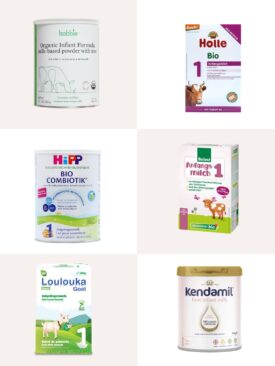
- Best brands of goat milk formula: There are several cleaner goat milk formulas from brands like Holle, Kendamil, and Kabrita.
Is Goat Milk Formula Better for Babies with Milk Protein Intolerance?
The best cow’s milk formulas are designed to be as close to breast milk as possible, with the correct proportions of carbohydrates, protein, and fats, as well as vitamins and minerals, and sometimes additional nutrients like DHA, ARA, prebiotics, and probiotics. Goat milk formulas serve the exact same purpose, but they have an advantage: the proteins are smaller and easier for babies to digest, and they are less likely to irritate their sensitive digestive systems, minimizing the chance of unpleasant symptoms such as constipation, gas, and cramps. Furthermore, goat milk proteins form softer curds when they reach the stomach, which decreases the chance of spit-up and regurgitation.
Skip the Research… It's Already Been Done
12+ years of label-reading, testing, and returns — these products earned their place on my Amazon store.
Shop My Amazon PicksThe fat globules in goat milk are also smaller and easier to digest than those in cow’s milk. Goat milk does not contain the compound agglutin, which is what causes the fat in cow’s milk to clump together. And goat milk is naturally homogenized, unlike cow’s milk.
Around 3% of babies are thought to have a milk protein allergy, which means that consuming even a small amount of intact milk protein will result in an allergic reaction, such as hay fever-like symptoms, digestive problems, or skin rashes. Some formulas partially hydrolyze the proteins in order to make them more similar to breast milk proteins, and thus easier for babies to digest. However, cow’s milk is not the only culprit. Approximately 8% to 14% of babies with a cow’s milk protein allergy will also have problems tolerating soy formula. It’s important to recognize that for babies with a diagnosed milk protein allergy, goat milk formula is unlikely to be any less allergenic than cow’s milk formula, due to their many similarities.
You should always consult with your pediatrician or pediatric gastroenterologist when choosing a baby formula, especially when your baby has a confirmed milk protein allergy. In such instances, a hypoallergenic formula in which the proteins have been extensively hydrolyzed (or, in some cases, an elemental or amino acid-based formula that doesn’t even contain protein fragments) is probably the only way for your baby to be formula fed without having a reaction.
Protein in Goat Milk Formula
However, there are many babies without a diagnosed milk protein allergy who are nevertheless sensitive to the proteins in cow’s milk. This is not surprising when you consider that the protein compositions of cow’s milk and breast milk are significantly different. For newborns, breast milk contains around 80% whey proteins and 20% casein proteins, whereas cow’s milk contains closer to 60% casein and 40% whey. Whey can be digested much more quickly than casein,7 so it’s ideal for younger infants. The composition of breast milk changes over time to meet the needs of growing babies, and mature breast milk actually contains relatively equal amounts of whey and casein.
Many baby formulas adjust the milk protein ratio in order to have more whey than casein. This is true for goat milk formulas, as well. Goat milk naturally contains a lot of casein, with a whey:casein ratio of 20:80, but some brands of goat milk formula alter the protein composition.
Because of the differences between cow’s milk and goat milk in terms of the types of proteins they contain (especially certain casein proteins), some babies who are sensitive to cow’s milk formula may still be able to tolerate goat milk formula. It’s possible that the specific protein your baby is sensitive to may not be present in goat milk or, more likely, it will be present in smaller quantities. Notably, goat milk contains only a very small amount of the casein protein known as alpha-s1, which is responsible for triggering many cow’s milk allergies. However, milk protein sensitivity depends entirely on your baby and the types of proteins that his or her digestive system can handle. Unsurprisingly, there are many similarities between goat milk and cow’s milk, and many babies who have a cow’s milk sensitivity (as evidenced mainly by digestive issues such as colic, gassiness, flatulence, cramps, bloating, and constipation) may have a similar reaction to goat milk formula.
For babies with a suspected cow’s milk sensitivity (rather than a confirmed allergy), many parents choose to try a goat milk formula before switching to a hypoallergenic formula. Hypoallergenic formulas are more heavily processed than “normal” formulas because the proteins have to be broken down extensively. Furthermore, some of these formulas (such as Enfamil Nutramigen and Similac Alimentum) contain little to no lactose in order to further reduce the chance of digestive issues. Instead, they contain unhealthy sweeteners like sugar and corn syrup solids in order to provide allergy-prone babies with an easy source of nutrition.
Many babies find the taste of hypoallergenic formulas unappealing, and some of these formulas do have an unpleasant odor. Even the best hypoallergenic formula from Europe, HiPP HA Combiotik, is more heavily processed — and less tasty — than its counterparts with intact milk proteins, HiPP Dutch and HiPP UK, although HiPP HA does use organic lactose as its primary carbohydrate. So instead of switching to a hypoallergenic formula, it may be worth trying a goat milk formula instead.
Are Goat Milk Formulas Healthier Than Cow’s Milk Formulas?
It wouldn’t be accurate to declare that goat milk formulas are necessarily any healthier than cow’s milk formulas. There are certain cow’s milk formulas (such as HiPP Dutch, HiPP UK, and Holle Bio) that meet the highest standards for organic ingredients and do not contain processed sweeteners or artificial additives, and I would recommend them to babies without allergies or milk protein sensitivity issues where the mom can’t breastfeed. (My readers are located all around the world so please check with your pediatrician before starting any baby formula.) Likewise, with goat milk formulas, it’s all about being familiar with the brand and the ingredients, in order to determine how healthy
As previously mentioned, cow’s milk and goat milk are both very different from breast milk. So regardless of the different nutrients in whole cow’s milk vs. whole goat milk, both cow’s milk and goat milk formulas are altered with the addition or reduction of certain carbohydrates, fats, vitamins, and minerals (for example, reducing the overall protein content and adding additional lactose), in order to approximate the nutritional content of breast milk. This is why babies under one year old should only be fed breast milk or a high-quality formula, rather than whole cow’s milk or whole goat milk.
It’s worth noting here that goat milk formulas are perfectly acceptable for babies without feeding issues or food intolerances. Goat milk formulas provide complete nutrition and have just as many vital nutrients as cow’s milk formulas. Some research has even suggested that certain micronutrients in goat milk are more bioavailable than those in cow’s milk, although probably not in significant quantities.
Recent research has also confirmed that goat milk formulas contain many different types of naturally-occurring prebiotic oligosaccharides, some of which are also found in breast milk. Goat milk contains more oligosaccharides than cow’s milk.8 A 2019 study by Australia’s RMIT University, published in the British Journal of Nutrition, identified 14 unique prebiotics in commercial goat milk formula, five of which are also in breast milk. This indicates that goat milk formula can serve a similar function to breast milk in terms of encouraging the growth of helpful gut flora like bifidobacteria and protecting against gastrointestinal infections, such as E. coli. It has long been known that breast milk has anti-infection properties, and it now appears that the oligosaccharides (especially fucosylated oligosaccharides) in goat milk may play a similar role to the immunity-boosting properties of breast milk.
What to Look for When Choosing a Goat Milk Formula
When choosing a goat milk formula, it’s very important to select a well-respected, high-quality product. Since goat milk formulas are less common than cow’s milk formulas, there are fewer options to choose from, but there are several excellent formulas that I would not hesitate to recommend, particularly for babies who are having mild digestive symptoms as a result of cow’s milk formula. Holle Goat, Kabrita, and Nannycare are my top choices for goat milk formula.
I strongly recommend choosing a formula that does not contain any GMO ingredients, and ideally one that is organic. I always look carefully at the list of ingredients to make sure that the formula doesn’t contain synthetic nutrients or synthetic preservatives. I usually favor formulas that contain lactose as the primary carbohydrate source, as lactose is the main carb in breast milk, or at least avoiding heavily processed sweeteners like corn syrup and glucose syrup.
Many parents prefer formulas that have added prebiotics/probiotics to promote a healthy digestive system and impart immune protection. These are good “added extras,” but not necessarily crucial, particularly since goat milk naturally contains many oligosaccharides. You can also give your baby a separate baby probiotic supplement, so this may not be necessary in
Some parents also look for formulas that contain omega-3 and omega-6 fatty acids like DHA and ARA to promote a healthy brain, eyes, and nervous system. Be careful with DHA because you want to ensure it is not hexane-extracted.
The Best Goat Milk Formulas (Reviews)
1. Holle Organic Infant Goat Milk Formula
Buy on Organic Baby Food 24 | Organic Formula Shop | Organic’s Best
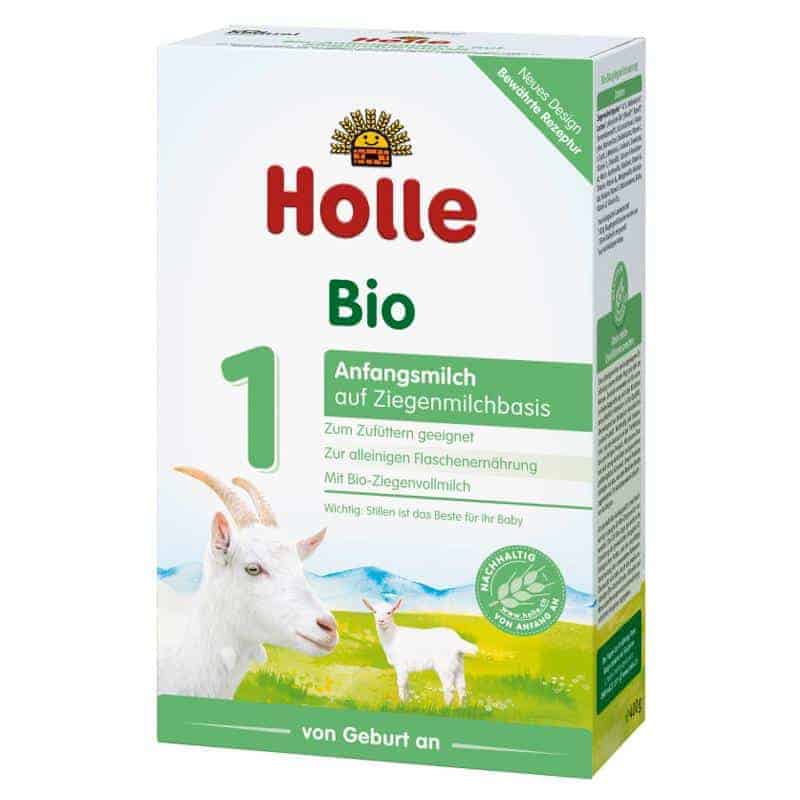
Holle Organic gets my vote for the best available goat milk formula. One of the main reasons is that it’s one of the only organic goat milk formulas on the market. However, there are many other reasons to recommend it besides the “organic” label. Holle is one of the oldest and most highly-regarded baby formula brands in Europe, and the company is well known for its high standards of animal welfare, commitment to sustainable agriculture, and formulas with only a few key ingredients.
Additionally, European standards for organic products are higher than those in the United States, so you can feel confident that there are no unwelcome synthetic ingredients or preservatives, pesticides, hormones, or GMO ingredients in Holle formulas. Holle Goat is free from artificial flavors, colors, and chemical additives. It’s also one of the only semi-vegetarian baby formulas on the market, as it does not contain any fish oil, nor has it been processed with animal-based enzymes. And parents report that it tastes and smells delicious!
Holle Goat contains a base of whole organic goat milk. The carbohydrate sources in Holle Goat Stage 1 are organic lactose and organic maltodextrin, while Holle Goat Stage 2 also contains a small amount of starch. The reduced lactose content may help babies who are struggling to digest
Because it does not contain additional whey, the ratio of whey
Holle Goat features a blend of organic vegetable oils and key vitamins and minerals such as calcium, iron, Vitamin A, and Vitamin D. Beyond this, there aren’t many other ingredients in Holle, making it one of the simplest and cleanest formulas on the market.
Holle Goat is available in both Stage 1 (0 to 6 months) and Stage 2 (6 months onwards) formulas, so your baby can be fed with this formula right through infancy. As it provides complete nutrition, Holle Goat is suitable on its own or as a supplement to breast milk, and the Stage 2 formula is perfect for older babies who have begun eating solid foods.
2. Kendamil Goat Milk Formula
Buy from Formuland
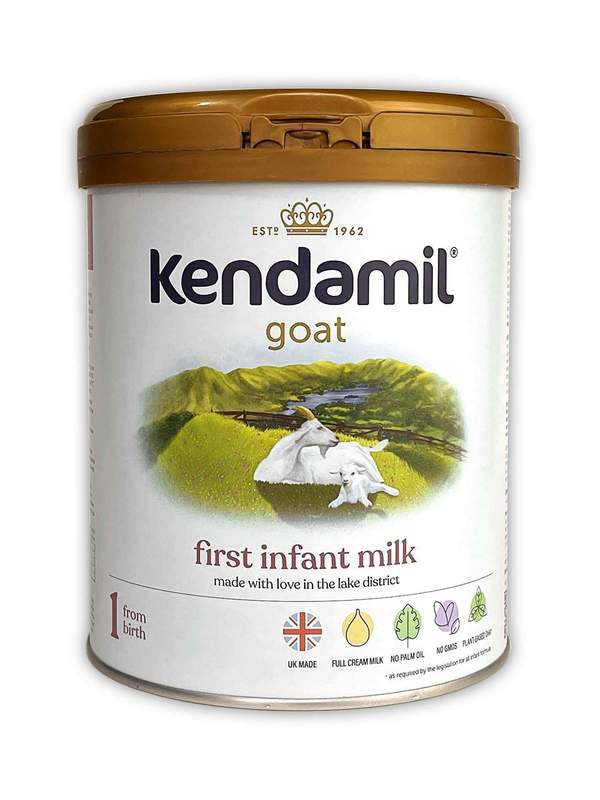
Made with A2 goat’s milk, Kendamil Goat Milk Formula is another wonderful and clean formula option for you to consider. We’ve written in detail about Kendamil’s manufacturing and ingredient standards, and the same high standards apply to their goat milk formula. Kendamil is one of the most popular brands in the United Kingdom and is growing in popularity around the world.
Kendamil’s goat milk formula uses 100% full cream goat’s milk (this is so useful and important!) that is rich in vitamins including Vitamins A, C, and D. It also naturally contains prebiotic fiber, which helps with your baby’s gut health and digestion. Uniquely, Kendamil is also made without any palm oil, which can be difficult on a baby’s (or an adult’s) digestion. Their goat milk formulas also contain plant-based DHA, so you don’t have to worry about hexane extraction. Kendamil also avoids ingredients such as maltodextrin, soy, and wheat.
The main carbohydrate in Kendamil’s goat milk formula is lactose, and honestly the only complaint I really have is that the vegetable oils blend contains sunflower and rapeseed oils. Otherwise, truly, this goat milk formula is extremely well made and contains high-quality ingredients. It is definitely worth considering as you are looking for a goat milk formula for your baby.
3. Jovie Organic Goat Milk
Want to Save This Post?
Buy on Organic’s Best | Formuland
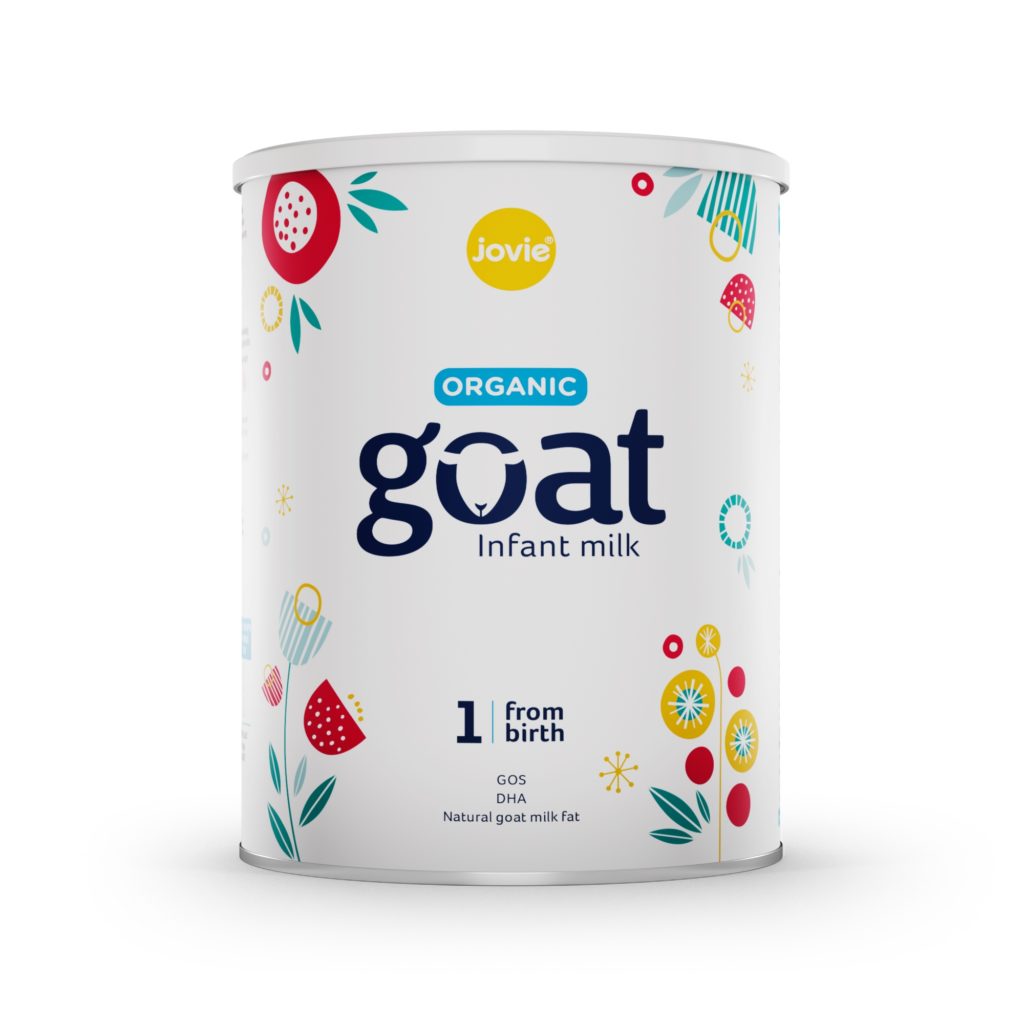
Another European-made goat milk formula, Jovie’s Organic Infant Goat Milk formula contains whole-fat organic goat milk and organic lactose as its two main ingredients. What I especially like is that it contains no soy, coconut, or palm oil, which is especially helpful for sensitive little ones. It does contain rapeseed and sunflower oils, though.
It is so important to choose a formula made with full-cream milk, ensuring that your baby is getting all of the goodness possible from their formula. And this formula includes some added prebiotics, which is great for babies getting formula.
4. Kabrita Goat Milk Formula

Buy on Amazon | Kabrita USA
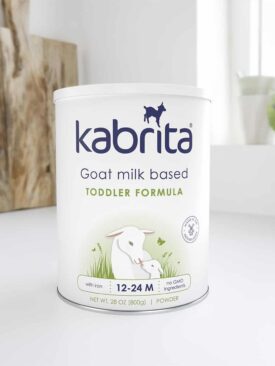
Kabrita is a gentle goat milk formula from the Netherlands. Compared to Holle, it has a more complex list of ingredients, as it tries to approximate all of the nutrients and micronutrients found in breast milk. In addition to 22 vitamins and minerals, this formula contains the fatty acids DHA and ARA, which are intended to promote a healthy brain, eyes, and nervous system. It also contains prebiotics in the form of
Just as in breast milk, the main carbohydrate in Kabrita is lactose, unlike some of the other goat milk formulas that have
Unfortunately, in contrast to Holle, the ingredients in this formula are not certified organic, although Kabrita does have a commitment to use exclusively non-GMO ingredients according to EU standards. Although I always prefer to recommend organic products, Kabrita’s sterling reputation and clearly-documented dedication to high standards of agriculture and manufacturing
Also be sure to check out my full Kabrita goat milk formula review.
5. Nannycare
Buy on Formuland | Organic’s Best
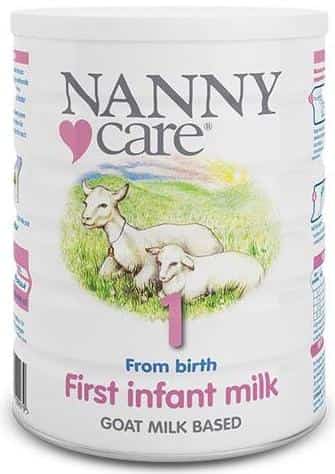
Nannycare is a popular goat milk formula brand from the United Kingdom that fulfills many of my criteria for a recommended formula. The main ingredient in this formula is pasteurized whole goat milk, and it contains additional lactose as its source of carbohydrates, without any processed sweeteners such as corn syrup or glucose syrup. In contrast to Kabrita (but similar to Holle), Nannycare does not contain any additional whey, so the whey:casein ratio is closer to 20:80. In addition to milk fat from the goat milk, the simple fat blend in Nannycare consists of sunflower and rapeseed oils, making it one of the few baby formulas to be completely free from palm oil. Nannycare contains all of the essential vitamins and minerals for growing babies, and few extraneous ingredients.
Unfortunately, Nannycare formulas are not organic, so it’s harder to be absolutely sure about the quality and source of the ingredients. Also, Nannycare does not contain any prebiotics/probiotics, nor any omega-3 or omega-6 long-chain polyunsaturated fatty acids such as DHA or ARA, so babies on this formula won’t be able to benefit from the helpful properties of those ingredients, such as promoting a healthy digestive system, boosting the immune system, and contributing to eye, brain, and nervous system health.
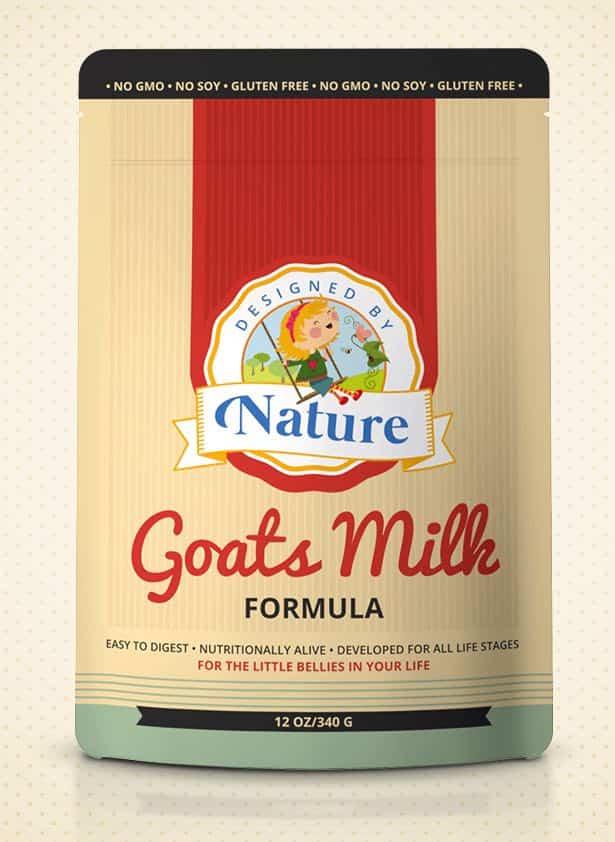
6. Designed by Nature
Buy on Designed by Nature
Designed by Nature is an American formula that is known for its goat milk and cow’s milk formulas. Unlike the European formulas, this product is designed for babies of all ages, so it’s suitable as a complete source of nutrition, as a complement to breastfeeding, or for babies who are eating solid foods. Because of the wide range of uses for this formula, you won’t have to transition between stages when your baby reaches a certain age.
The list of ingredients also sets this formula apart from its competitors, although the main ingredient is, unsurprisingly, whole goat milk powder. Designed by Nature prides itself on containing mostly organic ingredients and being free from GMO ingredients, gluten, soy, and corn. The formula is high in unsaturated fats, and the fat blend includes organic coconut oil, organic sunflower oil, and organic olive oil. It also contains organic cod liver oil, which provides omega-3 fatty acids. There is no palm oil in this formula, which is a big plus for me!
Designed by Nature’s goat milk formula also contains “sweet dairy whey” in order to adjust the whey:casein ratio and be more like breast milk. Lactose is the main carbohydrate in this formula, although there is less of it than in a typical cow’s milk formula, and it does not contain any processed sweeteners like corn syrup.
Like Holle Goat and Nannycare, this formula doesn’t contain any prebiotics or probiotics, so you may want to supplement your baby’s diet with baby probiotics in order to maximize your little one’s digestive health.
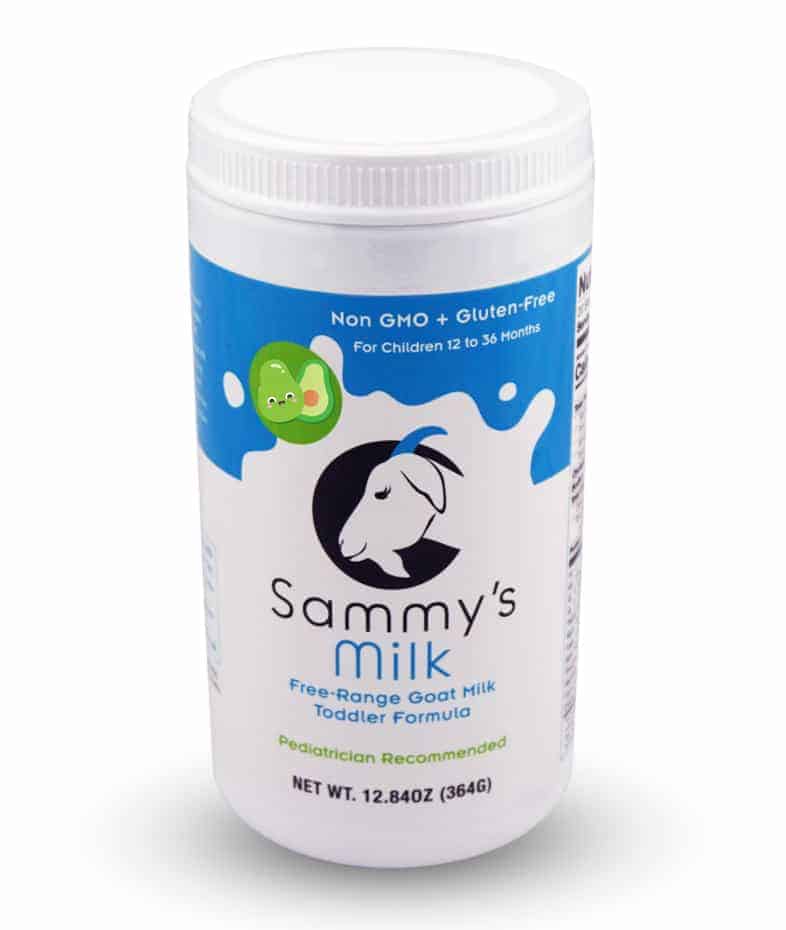
7. Sammy’s Milk
Buy on Sammy’s Milk
Sammy’s Milk is a goat milk-based toddler formula that has been designed with a simple list of only six ingredients, as wells as 23 vitamins and minerals (purportedly in their most absorbable form). It’s a good option for toddlers who are having trouble digesting cow’s milk products, but it can also be used as a supplement to breast milk, in conjunction with a varied diet of solid foods.
Although this formula is not certified organic, there are no GMO ingredients or artificial additives in Sammy’s Milk. The main ingredient is hormone-free, chemical-free, and pesticide-free whole goat milk, from free range animals that have been well cared for and fed a premium diet, including natural vegetation and organic feed. Interestingly, Sammy’s Milk uses molasses as the carbohydrate source, which has the added benefit of being a great source of natural, bioavailable non-heme iron. Sammy’s Milk is also distinctive because it contains avocado oil as a fat source, rather than the more typical vegetable oils like sunflower, palm, rapeseed, and soy oil. This allows toddlers to benefit from the antioxidants, oleic acid, lutein, and wide array of vitamins and minerals in avocado.
You’ll also find both fructo-oligosaccharides and galacto-oligosaccharides in Sammy’s Milk, which are prebiotics that boost gut flora, as well as omega-3 fatty acids like DHA and EPA from fish oil. On their website, Sammy’s Milk emphatically points out that the fish oil is free from mercury and other heavy metals and comes only from wild-harvested fish.
Unfortunately, Sammy’s Milk received some negative press in 2016 and 2018 due to concerns about potential contaminants, so it may be worth looking into this further if you are considering purchasing the formula. However, as of 2019, Sammy’s Milk has redesigned their formula to ensure that it meets all FDA requirements for appropriate levels of micronutrients and that it doesn’t contain any unwanted substances.
How to Switch to Goat Milk Formula
If you’re already using formula, making the switch to goat milk formula isn’t any different than transitioning between cow’s milk formulas. The most important thing to remember when transitioning formulas is that the more gradually you can switch, the better, in terms of easing your baby’s digestive system into accepting a new formula. This transition may take up to one or two weeks, depending on your baby and how quickly he or she adjusts to the new formula. And it’s not just about digestion: although many goat milk formulas are just as delicious as cow’s milk formulas, they will have a slightly different taste that your baby may not appreciate at first.
Generally, you should be able to start by mixing a bottle made by using 75% of your current formula powder and 25% of the new goat milk formula powder. After a few days, you should be able to move on to 50% current formula powder and 50% goat milk powder. And when your baby is able to tolerate these proportions, you can make up a bottle with 75% goat milk powder and 25% old formula powder. A few days after this, your baby will hopefully be ready for a bottle consisting of
Final Thoughts on Goat Milk Formula for Babies
Although goat milk formula isn’t a magical cure to all of your baby’s digestive issues, it can be a great option to explore if your baby is showing signs of cow’s milk intolerance. Regardless of your baby’s specific situation, goat milk formula is a perfectly valid alternative to cow’s milk formula, as it contains all of the vital nutrients that your baby needs to grow. If you think that your baby could benefit from the unique protein composition of goat milk formula, discuss your options with your pediatrician.
Making the switch to a new formula made with an unfamiliar type of milk may seem like a big step, but it’s no different than switching to any other formula. A high-quality goat milk formula made with whole, nutritious ingredients and minimal additives could be just what your baby needs in order to enjoy his or her daily feeds, without the unpleasant side effects of a milk protein sensitivity.
Keep Reading:
- The Best Organic Baby Formula: Your Guide to the Healthiest Options for Your Baby
- The Hypoallergenic Infant Formula Guide
- From Farm to Bottle: Meet Kendamil Organic Baby Formula
- 4 Reasons Moms Love Kabrita Goat Milk Formula (Hint: It’s Very Gentle!)
- 15 Things to Try When You Need to Calm a Fussy Baby
- The Surprising Benefits of Camel Milk for Babies and Children






Leave a Reply