Baby wipes are one of those baby products you know you need, and in bulk. They show up on every registry checklist, every changing table, and every list of things to pack in your diaper bag. With my first two babies, I diligently read all the ingredient lists on baby wipes and settled on what I felt was the cleanest option possible, without really questioning the whole concept of baby wipes at all.
- Dry wipes vs. wet wipes at a glance
- Why dry wipes are better for babies
- Are the ingredients in wet wipes dangerous?
- What about WaterWipes and other “99% water” wipes?
- But don’t studies show that wet wipes are safe?
- Are dry wipes better for newborns?
- Are dry wipes better for sensitive or eczema-prone skin?
- Can dry wipes help with diaper rash?
- Is water enough for diaper changes?
- The honest downside of dry wipes
- Are dry wipes cheaper than wet wipes?
- Are dry wipes better for the environment?
- How to switch from wet wipes to dry wipes
- Why I’m glad I switched to dry wipes
As crunchy as I am, it took me three babies to realize that I didn’t need to use a wet wipe for every single diaper change or every single bit of drool, every cleanup after eating solids, or to wipe her little nose. I had a very simple realization: the wipe did not need to come out of the package already wet. I could use a plain cotton wipe and add water myself when I needed it.
That realization gave me much more control over what I was putting on my baby’s skin several times a day. See, wet wipes require preservatives to keep the wipes from getting moldy or developing bacterial overgrowth on the shelf or when sitting in your car. And they need other ingredients like emulsifiers to make the formula feel gentle on baby’s skin.
Short on time? I’ve got you.
I’ve already read the labels, so you don’t have to. Everything on my Amazon store is a pick I’d feel good recommending to a friend.
Shop My Amazon PicksI never felt good about the ingredients in baby wipes, but I felt that was just one thing I couldn’t avoid… I considered it part of my 20% as a mama.
But then, it felt like in one simple moment, I had made it possible for us to avoid several preservatives and unwanted chemicals. What a huge win for me as a crunchy mama! So to say I am thrilled with using dry baby wipes is a total understatement… they are amazing and I will *NEVER* go back to wet wipes for a baby.
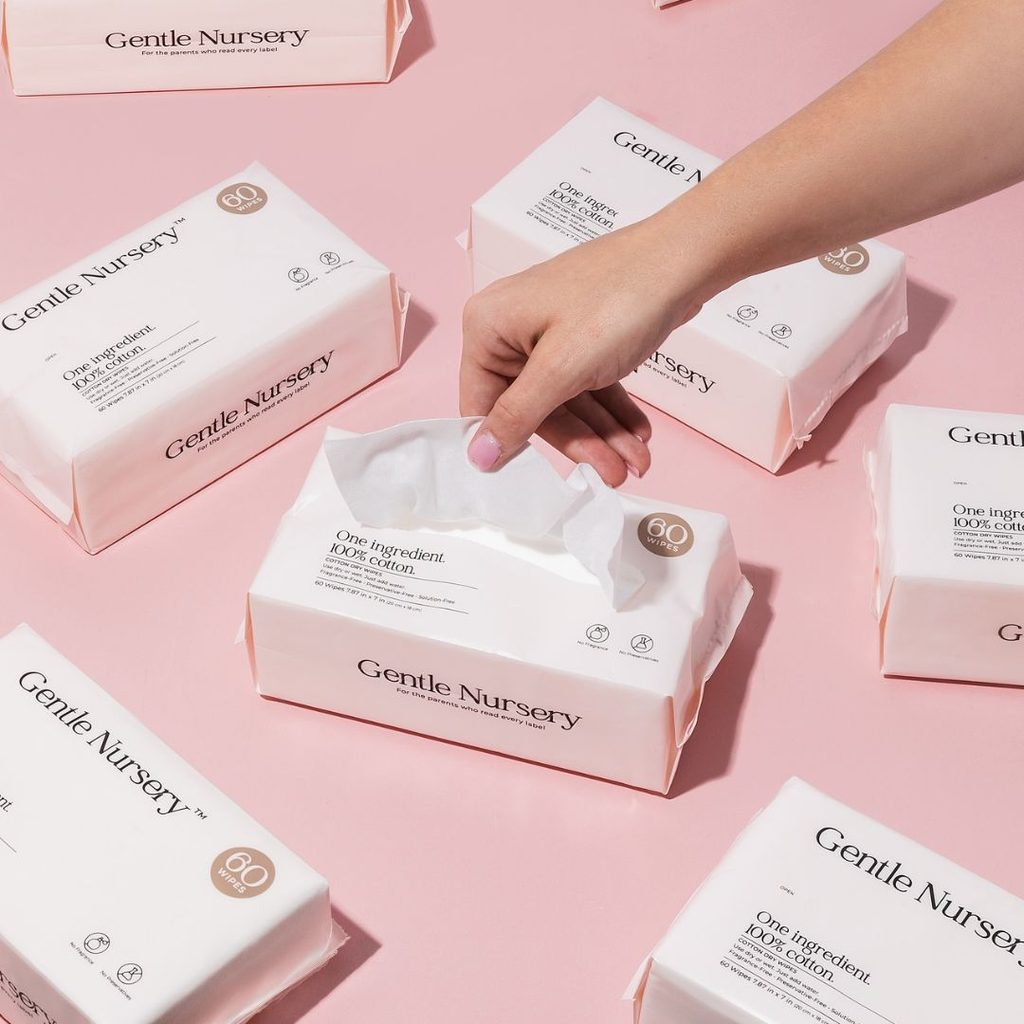
Key Findings: Yes, I 100% believe dry wipes are better for babies. A plain cotton dry wipe lets you clean with cotton and water, while a wet wipe repeatedly applies a stored liquid formula that requires a preservation system and may also contain cleansers, pH adjusters, skin-conditioning ingredients, or fragrance. Dry wipes are the simpler choice because they reduce the number of ingredients touching your baby’s skin. Here’s the top brand I recommend!
Dry wipes vs. wet wipes at a glance
The most important difference is not whether the sheet feels wet or dry. It is what comes with it.
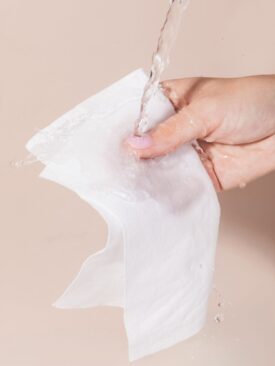
A dry wipe is a disposable cloth-like sheet sold without a liquid formula. You can use it dry or simply wet it under the sink or by using a spray bottle immediately before use.
A wet baby wipe is a sheet stored in a liquid cleansing formula. Because it may sit wet inside a sealed package for months, the product must be formulated and manufactured to control microbial growth. Depending on the brand, that formula can also contain surfactants, pH adjusters, emulsifiers, conditioning agents, botanical ingredients, and fragrance.
| Dry baby wipes | Wet baby wipes | |
|---|---|---|
| What touches your baby’s skin? | The wipe material plus whatever you add, usually water | The wipe material plus a pre-mixed liquid formula |
| Are preservatives needed in the liquid? | No; there is no stored liquid to preserve | The wet product needs a system that keeps it microbiologically stable |
| Can you control the ingredients? | Yes! Use dry or add water or cleanser | No; the formula is chosen by the manufacturer |
| Best feature | Simplicity and ingredient control | Immediate convenience |
| Main drawback | You need water for a messy diaper; this requires one extra step (sink or spray bottle) | More ingredients, including preservatives |
| Can it be used to pat skin dry? | Yes | No |
| Can the pack dry out? | No | Yes, if the package is not sealed well |
| Best everyday use | Home changing station, newborn routine, sensitive skin | Travel, daycare, or emergencies where convenience comes first |
Why dry wipes are better for babies
Wet wipes are undeniably convenient. They can be used right out of the pack, without any added steps (unless you are using a wipe warmer). But when I think about what I actually want touching my baby’s skin every day, dry wipes are the clear winner. Let’s break this down a bit more…
✅ Dry wipes remove the liquid formula from the equation
My biggest reason for choosing dry wipes is also the simplest: they let me skip the 10-ingredient formula.
With a plain 100% cotton dry wipe and clean water, I know exactly what I am using. I do not need to compare preservatives, decode botanical extracts (is Japanese honeysuckle an endocrine disruptor or not!?), check whether “unscented” really means fragrance-free, or wonder whether the brand has recently changed its ingredients.
This does not mean every ingredient in every wet wipe is dangerous; I’m not trying to say that at all. Some are harmless or even helpful; it means they’re unnecessary because a better alternative now exists. If cotton and water can clean my baby just as effectively and almost just as easily as pulling out a wet wipe, I would much rather start there.
And when I talk about reducing chemical exposure, I’m talking about reducing repeat exposure to the added chemicals and ingredients in the wet-wipe formula, including preservatives, surfactants, fragrance, and other formula components. I am not pretending that cotton and water are literally “chemical-free.” I am choosing the option with fewer added substances because the extras are not needed for my everyday routine.
✅ Wet wipes create significant repeated exposure, not one occasional exposure
Baby wipes are not a product you use once a week. They can touch the diaper area over and over throughout the day, and many of us also use them on hands, faces, high-chair messes, and runny noses. That means our babies are using anywhere from as few as 5 to as many as probably 12 wet wipes per day, garnering repeat exposure to preservatives like sodium benzoate, ethylhexylglycerin, and phenoxyethanol.
Yeah, no thanks. But I do want to be clear that I am not suggesting that one wet wipe equals harm. I am looking at the cumulative routine. When I have an easy way to reduce unnecessary ingredient exposure several times a day, that feels like a worthwhile swap.
✅ You control the wipe material too
The liquid formula is only half of the product. The wipe itself can be made from cotton, regenerated cellulose such as viscose or rayon, polypropylene, polyester, or a blend.
“Plant-based” does not automatically mean cotton, and “bamboo” wipes are generally made from bamboo-derived rayon or viscose rather than an intact bamboo fiber. Even wipes labeled as “cotton” might sneakily list “viscose” elsewhere on the label, which means that they are made from cotton waste (not the cotton boll itself) or are mixed with rayon fibers.
Not to mention, most mainstream wet wipes also use synthetic fibers. When you’re so busy worrying about the ingredients in wet wipes, you often forget to even consider what the wipe material itself is made from.
With dry wipes, it is much easier to shop specifically for 100% cotton wipes and verify that the sheet contains no added lotion or fragrance. That gives me control over both parts of the product: the wipe and what I put on it.
✅ A dry wipe can clean and then help you remove moisture
Keeping the diaper area clean matters, but so does keeping it dry. Moisture, friction, urine, and stool can all contribute to irritation.
With dry wipes, I can wet one wipe for cleaning and use another dry wipe to pat the skin before putting on the next diaper. The American Academy of Pediatrics recommends cleaning gently, allowing irritated skin to air-dry, and using water from a spray bottle when rinsing would be less painful than rubbing.
That wet-then-dry routine is one of the practical benefits I did not appreciate until I stopped using pre-moistened wipes exclusively. Is this why my first two babies had more diaper rashes than baby 3? I can’t say for sure.
Are the ingredients in wet wipes dangerous?
Not every wet-wipe ingredient is dangerous, and I don’t think fear is helpful here. I’ve listed several brands of wet wipes that I feel use the cleanest ingredients, and I have used some of these wipes for many years (long after my boys were babies). There are cleaner options out there, but again, they’re imperfect.
Back to the ingredients. Some baby wipes brands are a chemical concoction and I would never recommend using them. Baby wipes that include ingredients like Sodium Benzoate, Polysorbate 20, Ethylhexylglycerin, Butylene Glycol, PEG-40, Fragrance, and Disodium EDTA shouldn’t even be marketed for babies, in my opinion. These are harsh ingredients that have no place being used on delicate skin. When we’re comparing a dry wipe to these wipes, there is absolutely no question that the dry wipe + water or your favorite baby soap is far superior in terms of baby’s exposure to chemicals. It’s 100% cleaner.
And then there are some of the lower-tox baby wipes that made do without the harsh ingredients I listed above. And yet they still contain multiple ingredients, and most of these ingredients have a real function. A preservation system, for example, keeps a wet wipe from becoming contaminated during its shelf life and normal use. This is obviously important.
But “it serves a purpose” and “I need to put it on my baby several times a day” are two totally different things.
Wet-wipe formulas may contain preservatives, surfactants, pH adjusters, emulsifiers, skin-conditioning ingredients, botanical extracts, and fragrance. The exact list depends on the product. Some babies tolerate these formulas perfectly well; others may react to a specific ingredient.
The American Academy of Pediatrics notes that fragrances and preservatives in diaper wipes can occasionally trigger allergic reactions. The American Academy of Dermatology advises avoiding baby wipes for a child with eczema because their ingredients, and the rubbing involved, may trigger a flare. Their alternative is wonderfully simple: a clean, soft cotton cloth and warm water.
That is the heart of my position. I do not need to prove that every wet wipe is harmful to believe that fewer unnecessary ingredients make dry wipes the better default.
What about WaterWipes and other “99% water” wipes?
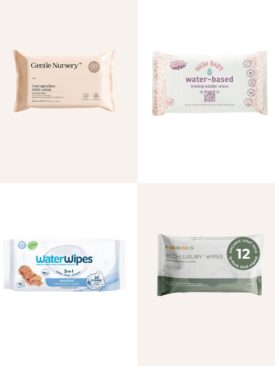
I know they’re hotly debated, but water-based wipes are the wet wipes I would choose when I need convenience. They usually have shorter ingredient lists than a conventional scented wipe, and that is a meaningful improvement over wipes with as many as 10 ingredients or more.
WaterWipes was my main brand of wipes for a long time, and their wipes are made with just 99.9% purified water plus a drop of fruit extract. The company says the fruit extract helps keep the wipes fresh, and that it contains a trace amount of benzalkonium chloride. Its wipe material is plant-based regenerated cellulose made from wood pulp, not cotton.
That is a much simpler formula than many wet wipes, but it is still a pre-formulated product with an added ingredient and a sheet material chosen by the manufacturer. And there are many families who have reported rashes and reactions to this, even though the ingredient list is so simple.
But, a plain cotton dry wipe with water is simpler still. And it works just as well, if not better.
So my preferences look like this:
- For everyday use: a 100% cotton dry wipe with clean water.
- When convenience matters: I still use dry wipes on the go and pack them in my diaper bag with a small spray bottle. If I am traveling or just need a wet wipe, I’ll use a minimal-ingredient, fragrance-free wet wipe.
- What I avoid: fragranced wipes, long or poorly disclosed formulas, and wipes that do not clearly identify their sheet material.
Please note: you do not have to throw away the travel pack in your diaper bag. This is about choosing the simplest option most of the time, not achieving perfection in every parking-lot diaper change.
But don’t studies show that wet wipes are safe?
This is where the conversation often gets flattened into “science says wet wipes are fine,” and the full picture is more complicated.
In a randomized trial of 280 healthy full-term newborns, one specific alcohol-free baby wipe and cotton wool with water had equivalent effects on skin hydration. That is useful reassurance that the tested wipe was tolerated under the conditions of that study.
It does not prove that every wet-wipe formula is identical, does not measure every possible outcome or every type of exposure, and it does not show that a preserved liquid formula is necessary when cotton and water are already working for your baby.
A later review examining baby wipes and diaper rash screened 420 records and included 21 studies. Although much of the literature favored baby wipes, the authors said no definitive conclusion could be drawn because many of the studies were industry-funded. They also identified potential allergens in some wipe formulas, including fragrance ingredients, a surfactant, and certain preservatives.
My takeaway is not that the studies are worthless. It is that “some properly formulated wet wipes can be tolerated” is a much narrower conclusion than “wet wipes are the best everyday choice.” I still choose the option that accomplishes the job with fewer added ingredients, and that is dry cotton baby wipes 99% of the time.
Are dry wipes better for newborns?
YES!!!! Newborns need the least amount of exposure to chemicals and extra ingredients, making dry cotton wipes with warm water an especially good choice during the newborn stage. They give you a very simple routine while your baby’s skin barrier is still developing, and you can control the temperature and amount of water you use.
Some newborn-care guidance favors plain water and soft cotton during the early weeks. Research also suggests that certain properly formulated wet wipes can be tolerated by healthy full-term newborns. For me, tolerating something isn’t the standard. Let’s raise the bar for our babies… the fact that a wet wipe can be tolerated does not create a reason to choose it over cotton and water.
(If your baby was premature, is receiving NICU care, has broken skin, recently had surgery, or has been given a specific skin-care protocol, follow the medical team’s instructions rather than substituting a product based on a general article, but I think this is an especially important and delicate time for baby to avoid harsh exposures.)
Are dry wipes better for sensitive or eczema-prone skin?
Dry wipes are my first choice when you are trying to remove possible product triggers from your baby’s routine.
A simple, soft cotton wipe with water eliminates the pre-mixed fragrance, preservatives, surfactants, and botanical ingredients that may be present in wet wipes. It also makes it easier to rinse instead of scrub when the skin is sore.
The American Academy of Dermatology specifically recommends avoiding baby wipes for children with eczema and using a clean, soft cotton cloth with warm water instead. That does not mean cotton and water will treat eczema, but it can remove a possible trigger while you work with your pediatrician or dermatologist. And having been an eczema mom, I can 100% tell you that is just as important as trying to deal with open eczema sores.
Can dry wipes help with diaper rash?
Dry wipes can simplify the routine, but dry wipes are not a treatment for diaper rash. Rashes can be caused by prolonged moisture, friction, stool, yeast, bacteria, allergy, or another skin condition.
If your baby’s skin is irritated, use plenty of water, be sure to avoid scrubbing, and pat or air-dry before applying whatever barrier product your pediatrician recommends. The American Academy of Pediatrics suggests using a squirt or spray bottle for a severe rash so you can rinse without rubbing.
(Of course, call your pediatrician if the rash has blisters, pus, open or bleeding areas, fever, rapidly spreading redness, or is not improving. A persistent rash should not be treated as a wipe-comparison experiment.)
Is water enough for diaper changes?
For many routine diaper changes, yes. Clean water and a soft wipe can remove urine and ordinary messes without adding a cleansing formula.
Stool can be sticky, especially during the newborn stage or after it has started to dry. The answer is usually more water and less friction: wet the wipe thoroughly, use a peri bottle or spray bottle to loosen the mess, fold the wipe as you go, and gently wipe clean.
If your doc recommends a mild cleanser for a particular situation, follow that advice. I would not, however, pre-mix a large container of homemade wipe solution and leave cotton wipes soaking in it. Once you add water, you have created the kind of damp environment that requires careful microbial control.
The honest downside of dry wipes
Dry wipes are better in my opinion, but wet wipes clearly win one category: convenience.
You need a water source for a messy diaper. At home, that is easy; you can just run the wipe under the sink or keep a spray bottle handy at the changing station. I’ve done this probably hundreds of times now and it is easy enough; I have no complaints about using dry wipes at home. However, I will fully admit that in the car, at daycare, or during an airport diaper change, a sealed wet-wipe pack may be more practical. So there’s definitely a time and a place for wet wipes.
Dry-wipe quality also varies. A thin wipe can tear, pill, or require three sheets to do the work of one thick wipe. And if the package says “plant-based” without naming the fiber, you may not be buying the cotton wipe you thought you were. (Here are the dry wipes I created after testing out the various options on the market.)
I solve the convenience problem by using dry cotton wipes at home and keeping a minimal-ingredient wet wipe in the diaper bag as backup. But, swaps like this need to work in real life or it will not become routine.
Are dry wipes cheaper than wet wipes?
They can be, but compare the cost per diaper change, not only the cost per sheet.
A cheap, thin wipe at 5 cents per wipe is not much of a bargain if you need three or four per diaper change. A thicker dry wipe may cost more individually but clean in fewer passes. It also doubles as a dry cloth for spit-up, drool, noses, high-chair messes, and patting the diaper area dry.
Organic cotton dry wipes tend to cost more and run on the thinner side. Bulk conventional cotton wipes may cost less, while reusable cloth wipes are usually the least expensive over time if the added laundry fits your life.
Are dry wipes better for the environment?
Not automatically. A disposable cotton wipe still becomes single-use waste, and cotton production has its own environmental footprint.
The material matters, though. Some wet wipes contain polypropylene, polyester, or other synthetic fibers, while some dry wipes are made from 100% cotton or regenerated cellulose. Look at the actual fiber disclosure rather than relying on “natural,” “plant-based,” or “biodegradable” on the front of the package.
If reducing waste is your top priority, reusable cotton wipes are the strongest option. If you need disposable wipes, choose a clearly disclosed material and use the fewest wipes needed to clean gently.
And no matter what the wipe is made from, do not flush it. Cotton and biodegradable wipes can still clog household plumbing and contribute to sewer blockages.
How to switch from wet wipes to dry wipes
It’s easy and you do *NOT* need a complicated DIY system. This is the setup that made the switch easy for me.
1. Choose a thick 100% cotton dry wipe
Check the material disclosure rather than trusting “plant-based” or seeing cotton on the front cover; flip the package over and make sure it says 100% cotton. I prefer a soft, thick wipe with no added lotion, fragrance, or dry treatment. (I tested several brands of dry wipes for months before creating my own brand; check out the dry wipe reviews here.)
2. Keep water at the changing station
Use a clean peri bottle, fine-mist spray bottle, or the sink. Plain clean water is all I use for routine changes, although I do sometimes add a French diapering lotion or diaper cream when I feel like baby’s bottom needs a little extra support.
3. If water is needed, wet the wipes before opening the diaper
For a poop diaper, pull out one or two wipes and wet the ones you expect to use before you place baby on the changing table or right before you lift your baby’s legs (if you’re using a spray bottle). This fixes the biggest practical complaint about dry wipes: trying to add water one-handed in the middle of a mess.
If water is required, use enough water for the wipe to glide instead of drag.
4. Clean gently and pat dry
Fold to a clean section as you go, then use a dry corner or fresh wipe to pat away extra moisture.
5. Pack a realistic diaper-bag setup
Carry a small leakproof spray bottle if you want to use dry wipes away from home. I still keep minimal-ingredient wet wipes in the car sometimes as backup because sometimes convenience really does win.
6. Do not pre-soak the whole package
Wet only what you need for the immediate change. Do not pour water or a homemade solution into the package and leave it sitting without a tested preservation system.
Why I’m glad I switched to dry wipes
I used to think wet wipes were simply part of having a baby. Now I see them as the convenience option, not the best everyday option.
When I can clean effectively with a soft cotton wipe and water, that is what I choose. It gives me fewer added ingredients, more control, and one less baby-product formula to keep researching.
If you are ready to make the switch, see my guide to the best dry baby wipes, including the cotton wipes I personally tested and the option I ultimately created for Gentle Nursery. Remember: you do not have to change everything at once. Start at the changing table and keep the travel pack for when you need it.
Have you tried both dry and wet wipes? I would love to hear which setup worked better for you.
Recommended: