When I was pregnant with my first baby, I read a book about how French mothers do things so differently than we Americans, and I’d say it’s pretty accurate. Having spent a lot of time in Europe during my pre-baby days, I can confidently say that we Americans value convenience and ease while the French value simplicity and tradition more. Of course, that’s a generalization, but I think it applies to motherhood.
- What Is liniment?
- Why French parents skip wet wipes
- Is there research on liniment?
- How to use liniment with dry wipes (step by step)
- Why dry wipes work so well with liniment
- Liniment vs. cleansing water vs. plain water
- Can liniment replace diaper cream?
- Can you make DIY liniment?
- The best liniments for the French diapering method
- Which wipes should you use with liniment?
- How to switch to the French Diapering Method
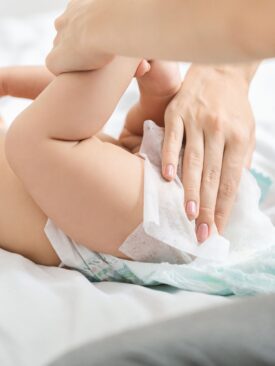
Take diapering; the French diapering method swaps wet wipes for a dry cotton wipe and a pump of liniment, a traditional French lotion made from olive oil and limewater. You put a little liniment on the wipe, clean your baby’s bottom, and you’re done. There’s no rinsing, and the thin layer of oil it leaves behind helps protect the skin until the next change.
If you’ve ever stood at the changing table staring at the back of a wet wipes package and wondering what half those ingredients are, you’re going to love French diapering. With my third baby, one of my goals was to simplify my baby care routine so I gave French diapering lotions a try for diaper changes, and honestly, I was surprised by how easy it is.
Short on time? I’ve got you.
I’ve already read the labels, so you don’t have to. Everything on my Amazon store is a pick I’d feel good recommending to a friend.
Shop My Amazon PicksIt’s one bottle of a light and soothing lotion and a stack of dry wipes. In this post, I’ll walk you through what liniment actually is, how to use it with dry wipes step by step, how it compares to cleansing water and plain water, and which liniments are worth buying.
What Is liniment?
Liniment (in France, liniment oléo-calcaire) is a creamy lotion made for cleaning the diaper area. The traditional recipe is about as simple as it gets: equal parts plant oil and limewater, which is water with a little calcium hydroxide dissolved in it. Shake it, and the two blend into a milky lotion.
French parents have used it for generations, and you’ll find it on the shelf in pretty much every French pharmacy. It’s only recently started showing up in American stores.
Here’s what each part does:
- The oil (usually olive oil) loosens and lifts mess off the skin, and it leaves behind a light, moisturizing layer.
- The limewater is mildly alkaline. Brands explain that this helps balance the acidity of urine so the skin stays closer to its natural pH.
Most modern liniments add a small amount of beeswax or a plant-based thickener so the oil and water don’t separate as quickly. The good ones are fragrance-free, organic, and have a short ingredient list you can actually understand without second guessing.
Why French parents skip wet wipes
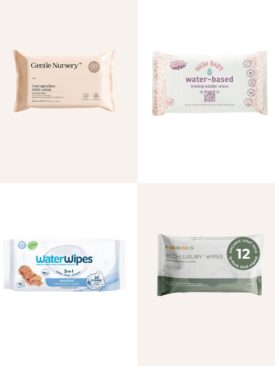
Wet wipes have to stay wet and germ-free in a sealed package for months, so they need preservatives, and many add fragrance, soaps or other cleansing ingredients too. (If you’re curious about what each of those ingredients does, I break it down in our guide to the safest baby wipes.) And if you want the full side-by-side, here’s my take on dry wipes vs. wet wipes.
The French approach skips all of that. A dry cotton wipe is just fabric, and the liniment is mostly oil and water. Fewer ingredients touch your baby’s skin at every change, and you’re the one deciding what goes on the wipe.
The other reason parents love it is the barrier. Because liniment leaves a thin layer of oil behind, a lot of families find they reach for diaper cream far less often. Many parents use it as an everyday, preventive step and save the diaper cream for when they actually need it.
Is there research on liniment?
I’ll be honest with you here, because I think you deserve the real answer. Liniment has a long track record of everyday use in France, but it hasn’t been studied much.
The most relevant study I found is a randomized trial registered in 2018 that compared three diaper-change routines in 133 babies: an oleo-calcareous liniment, fragrance-free baby wipes, and plain water with cotton pads. The researchers were measuring how many babies developed diaper rash over 28 days. I couldn’t find published results from that trial, so I can’t tell you which one came out ahead.
What we can say is this: the ingredients are simple and familiar, French pediatric care has relied on it for a long time, and the basic idea behind it (gentle cleaning, then a protective layer) is the same idea behind most diaper rash prevention advice. If your baby has sensitive skin or a rash that won’t clear up, check in with your pediatrician before you change your routine.
How to use liniment with dry wipes (step by step)
This is the part that surprises people. It really is this easy.
- Shake the bottle. Liniment separates when it sits, so give it a good shake before each change. A pump bottle makes this much easier one-handed.
- Pump liniment onto a dry wipe. One pump is usually plenty for a wet diaper. You’ll quickly learn how much your baby needs.
- Wipe front to back. Clean gently, getting into the skin folds.
- Don’t rinse. Leave the thin layer that’s left behind. That’s the part that protects the skin.
- Put on a fresh diaper. You don’t need to wait for anything to dry. If you see shiny, greasy spots, you used a bit more than you needed.
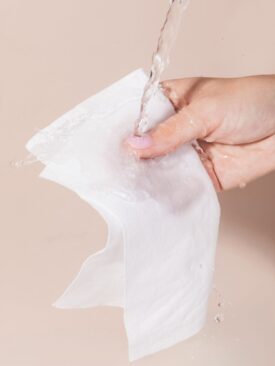
For messy diapers: Start by removing most of the mess with a dry wipe dampened with warm water (or the dirty diaper itself, if you’re quick). Then finish with liniment. (If “messy” usually means up the back, here’s how to prevent blowouts.)
On the go: Pour a small amount into a travel-size squeeze bottle and tuck a pouch of dry wipes in your diaper bag. If you forget the liniment, a dry wipe and some water from your water bottle will get you through.
Why dry wipes work so well with liniment
You can use liniment with cotton rounds, washable cloth wipes or dry wipes. In France, most parents use large cotton pads. In my experience, a good dry cotton wipe is the easiest swap for American parents because it’s bigger than a cotton round, it doesn’t fall apart when it gets wet, and you don’t have to wash it.
A few things to look for in a dry wipe for the French method:
- 100% cotton. Many “plant-based” and “bamboo” wipes are actually viscose (rayon), which is a processed fiber rather than the plant itself.
- Strong when wet. Liniment is oily, so a thin wipe can pill or tear.
- Big enough to fold. A larger wipe lets you fold it and use a clean side.
- Nothing added. No lotion, fragrance or preservatives, since the liniment is doing that job.
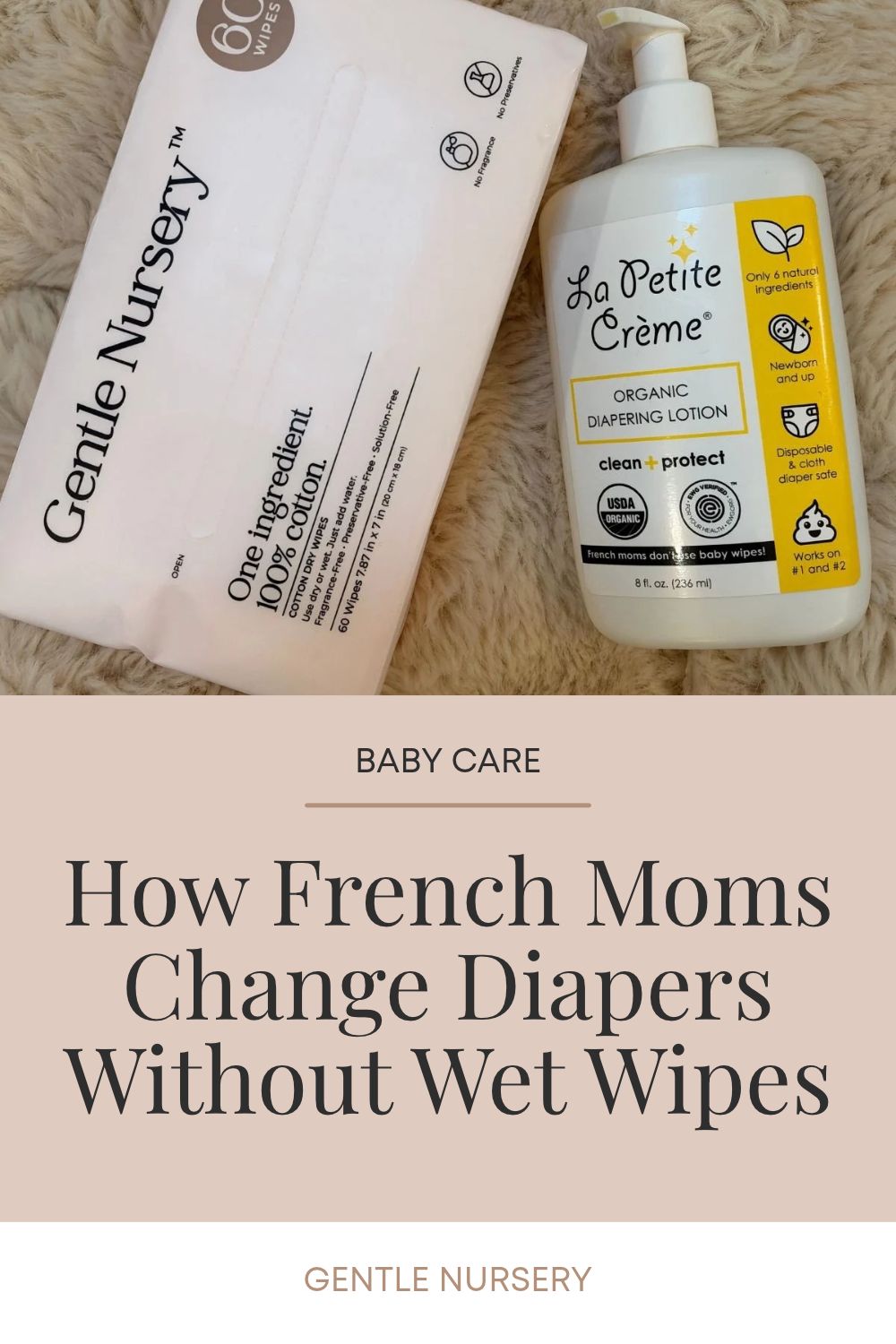
That list is exactly why I made our own. Gentle Nursery Dry Cotton Baby Wipes are 100% cotton with nothing else added, about 7.9 by 7 inches each, and they come 360 to a pack (six pouches of 60). They hold up when wet, and they’re soft enough for newborn skin.
If you’d like to compare options, I also have a roundup of the best dry baby wipes, and if you cloth diaper, our post on how to make DIY cloth baby wipes pairs well with liniment too.
Liniment vs. cleansing water vs. plain water
You’ll see three “French-style” ways to use a dry wipe. Here’s how I think about them.
Liniment cleans and leaves a protective, moisturizing layer behind. It’s my pick for everyday changes, especially if your baby is prone to redness or you’d like to use less diaper cream.
No-rinse cleansing water (sometimes called micellar water for babies) is a watery cleanser that lifts mess without leaving an oily layer. It’s a nice option if you don’t like the feel of oil, or for faces and hands. It doesn’t leave a barrier, so it won’t do the “diaper cream” part of the job. To be honest, I’ve never tried this myself so I have yet to be able to report back on this!
Plain warm water is the simplest and cheapest option, and it’s perfectly fine for a lot of changes, especially with newborns. It cleans, but it doesn’t moisturize or protect.
Plenty of families mix and match. I like liniment for occasional changes, water for quick wet diapers, and a real diaper cream when there’s an actual rash.
Can liniment replace diaper cream?
For everyday prevention, many parents find it can. That protective oil layer does a lot of what a light diaper balm does.
For a rash, I’d reach for a real diaper cream every single time. A liniment is not designed to soothe rashes, and you’ll miss out on some helpful ingredients if you don’t use a proper diaper cream. Even some liniment makers say so; if you’re looking for one, here are the natural diaper rash creams I recommend. And if a rash lasts more than a few days, has blisters or looks raw, call your pediatrician.
Can you make DIY liniment?
You’ll see a lot of DIY liniment recipes online, usually olive oil, limewater and beeswax. I understand the appeal, but this is one I’d buy ready-made.
Limewater is made from calcium hydroxide, which is caustic in concentrated form, and getting the dilution and mixing right at home is harder than it sounds. A ready-made liniment is tested for babies’ skin, and a bottle lasts a surprisingly long time because you only use a pump per change.
The best liniments for the French diapering method
These are the liniments I’d look at first. All three are fragrance-free and made for daily diaper changes.
Mustela Liniment
Mustela is the French baby care brand most American parents already know, and its liniment is made with extra virgin olive oil and 99% natural-origin ingredients. It’s fragrance-free and free of parabens, phthalates and phenoxyethanol, according to the brand.
The pump bottle is what makes it so easy at the changing table. You pump it straight onto a dry wipe, clean, and you’re done, with no rinsing.
Propre Baby French Diaper Care
Propre Baby was started by two moms who wanted to bring French-style diaper changes to the US, inspired by one founder’s own experience with liniment in France. Its French Diaper Care formula has just six natural ingredients, and the brand sells it alongside large organic cotton pads.
It’s a good pick if you like the idea of buying a complete starter system from a brand that specializes in this one thing.
La Petite Creme French Diapering Lotion
La Petite Creme makes a USDA Certified Organic diapering lotion inspired by French liniment. It’s fragrance-free and paraben-free, and it comes in a pump bottle. This is the brand I’ve been using and it has worked really well for us! I’d say it’s thicker and creamier than other liniments, so it feels a little more like a lotion than an oil.
Noleo 3-in-1 Diaper Care
Noleo takes the traditional French liniment recipe and keeps it short: limewater, organic olive oil, organic sunflower oil, beeswax and glyceryl stearate. That’s the whole list; it has no fragrance, fillers or preservatives. What sets Noleo apart from the others in this roundup is that it’s made to do three jobs: clean, moisturize and leave a barrier behind. It’s also a bright white lotion rather than a yellowish one, which sounds minor, but it makes it easier to see when you’ve wiped everything off.
Which wipes should you use with liniment?
Most companies recommend using liniment with cotton pads, but I find them to be way too small and inconvenient. I tried this method and did not like using the pads as much as I liked using a dry wipe. Maybe it’s the American in me, or maybe it’s the fact that I’ve been using wipes for so long that I was used to the size of a wipe for diaper changes. I would recommend using thick, dry cotton wipes like these.
Gentle Nursery Extra-Thick Dry Cotton Wipes
I made these wipes because finding a truly simple dry wipe was harder than it should be. A lot of wipes sold as “cotton,” “plant-based,” or “bamboo” are actually viscose, a highly processed fiber. Ours are 100% cotton with nothing else added: no lotion, no fragrance and no preservatives. With the French method, the liniment does the cleaning and protecting, so the wipe should just be a clean, soft surface.
These are thick enough to hold up to an oily liniment without pilling or tearing. At about 7.9 by 7 inches, they’re big enough to fold over and use a clean side, which a cotton round can’t do. Each pack has 360 wipes split into six pouches of 60. That means you can keep one at the changing table, one in the diaper bag and one in the car. They also work well with just warm water on days you run out of liniment, and they’re soft enough for newborn skin.
How to switch to the French Diapering Method
You don’t need to overhaul everything at once. Here’s how I’d start:
- Grab one bottle of liniment and a pack of dry cotton wipes.
- Use them for daytime changes at home for a week, while you get the hang of how much liniment to use.
- Keep your old wipes in the diaper bag at first if that feels easier, then switch the diaper bag over once you’re comfortable.
- Save diaper cream for when you actually see redness.
If you’re also thinking about what’s in your baby’s diapers, our guide to non-toxic diapers is a great next read, and the French method works beautifully with cloth diapers too.
I was a wet wipes mom for a long time, and switching felt like a bigger deal than it turned out to be. If you try liniment, I’d love to hear how your first week goes. Tell me in the comments!