
If you’re trying to conceive or planning for a baby in the future, you’re probably already thinking about vitamins, timing, ovulation, and sleep, but there’s another piece of the fertility puzzle that most women are never told about. And it’s something that affects all of us, no matter where we live or how healthy our lifestyle is.
- Why Experts Are Paying Attention to Environmental Toxins
- Why These Chemicals Are So Hard to Avoid
- The Impact of These Chemicals on Family and Fertility
- How These Chemicals Affect Egg Quality, Ovulation, and Conception
- Exposure Begins Before Conception, and Continues During Pregnancy
- The Costs of Chemical Exposure Go Beyond Fertility
- How to Reduce Toxic Exposures When You’re TTC, Pregnant, or Raising a Family
- Final Thoughts
A major comprehensive global report by Systemiq just revealed that everyday toxic chemicals (especially the ones circulating through our food system and in the environment) are quietly influencing fertility, pregnancy outcomes, and even our babies’ long-term development. As a mom who has been through this journey and is very aware of how prevalent chemicals are in our daily lives, I want to walk you through what this means in a grounding, hopeful, and empowering way.
Because the truth is, once you understand what’s going on behind the scenes, you can make simple, meaningful changes that support your fertility and your future baby’s health. And that’s what we want: to be empowered and to make choices that best support our families.
This article is presented through a collaboration with Systemiq.
Skip the Research… It's Already Been Done
12+ years of label-reading, testing, and returns — these products earned their place on my Amazon store.
Shop My Amazon PicksWhy Experts Are Paying Attention to Environmental Toxins
The new report, Invisible Ingredients: Tackling Toxic Chemicals in the Food System, analyzed four major chemical groups that show up repeatedly in farming, food packaging, and food processing.
The report focuses on the food system because it’s where exposures to tens of thousands of synthetic chemicals converge, from farming and pesticides, to packaging, processing, storage, and distribution, making it the most pervasive and direct pathway for toxic chemicals to enter our bodies and influence fertility and child health.
Chemical Group 1: Phthalates
Phthalates make plastics soft and flexible. They’re used in vinyl, food packaging, and many personal care products. Because they don’t bind tightly to plastics, they easily leach into air, dust, and food. Phthalates disrupt hormones involved in ovulation, implantation, and sperm quality.
Chemical Group 2: Bisphenols (BPA, BPS, etc.)
Bisphenols harden plastics and create smooth can linings. They’re found in canned foods and drinks, plastic containers, store receipts, and food-handling gloves. Even “BPA-free” products often contain similar substitutes. Bisphenols mimic estrogen and can interfere with egg development, menstrual cycles, and early pregnancy.
Chemical Group 3: Pesticides and Herbicides
Used worldwide on fruits, vegetables, grains, and animal feed, residues often remain on food. Many pesticides act as endocrine disruptors that affect ovarian function, sperm quality, miscarriage risk, and fetal development.
Chemical Group 4: PFAS (Forever Chemicals)
PFAS create nonstick, waterproof, and stain-resistant coatings. They appear in cookware, water-resistant fabrics, stain-proof furniture, fast-food wrappers, and drinking water. PFAS persist in the body and have been linked to longer time to pregnancy, thyroid disruption, and developmental impacts in babies.
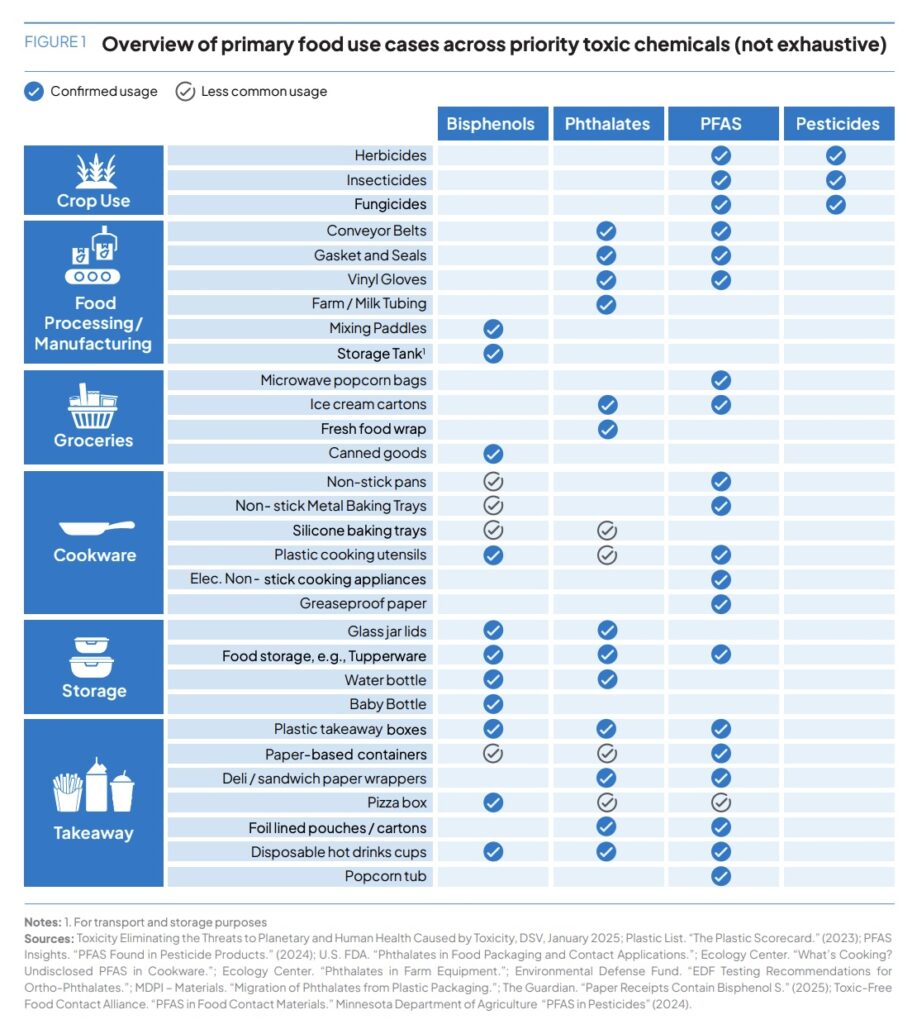
Source: SystemIQ Invisible Ingredients Study
Why These Chemicals Are So Hard to Avoid
One of the most eye-opening findings from the report is just how widespread these chemicals have become in modern food and food packaging.
Chemicals are used to grow food, protect crops from pests, line cans, coat wrappers, make packaging flexible, and keep food shelf-stable. In the US alone, more than 15,000 pesticide ingredients have been registered for agricultural use. Globally, more than 12,000 chemicals are intentionally added to food packaging and food-contact materials.
But it doesn’t stop there.
The report found that over 5,000 chemicals can migrate from packaging, containers, and food-contact materials into food, onto the skin, or into the air. Many of these chemicals were never designed to be part of the human diet, yet they leach into food or accumulate in soil and water.
And while these chemicals are incredibly pervasive in the food system, they’re often poorly regulated (or not regulated at all) until harm is definitively demonstrated.
As the report explains:
Industrial chemicals are regulated far less stringently than pharmaceuticals. While manufacturers of new drugs must prove their safety and efficacy before they can enter the market, industrial chemicals are permitted on the market until harm is demonstrated.
The Impact of These Chemicals on Family and Fertility
These four chemical groups are known endocrine disruptors.
They can mimic or interfere with hormones involved in ovulation, implantation, sperm production, fetal development, and other reproductive functions. Exposure during the reproductive years, pregnancy, infancy, and childhood can have lasting effects on lifelong health.
The most staggering finding? The report estimates 200–700 million fewer births worldwide between 2025 and 2100 as a direct result of chemical exposures.
This validates what so many couples are experiencing today: hormonal shifts, egg quality concerns, male factor infertility, and unexplained infertility diagnoses that seem to be rising every year.
How These Chemicals Affect Egg Quality, Ovulation, and Conception
You probably know that age affects egg quality. What most women don’t hear is that chemicals in the environment and in the products we use every day affect egg quality too.
Here’s what the research shows:
- Phthalates are linked to disrupted ovulation, altered menstrual cycles, lower oocyte (egg) quality, and impaired implantation.
- Bisphenols interfere with estrogen signaling and damage both eggs and sperm at the cellular level.
- Pesticides are associated with higher miscarriage rates, poor ovarian reserve, and reduced fertility in both women and men.
- PFAS exposure lengthens the time it takes to get pregnant and may increase the risk of pregnancy complications.
The hard thing to navigate is that these exposures don’t need to be massive to matter. Hormones operate in tiny concentrations. Even low-level, long-term exposure can influence reproductive function.
Exposure Begins Before Conception, and Continues During Pregnancy
Industrial chemicals reach us at every stage: soil, water, air, food packaging, cookware, and household/personal products. Most women are exposed regularly for years before they ever think about trying for a baby.
Then, during pregnancy, these chemicals can cross the placenta and influence:
- fetal hormone signaling
- fetal brain development
- immune system development
- metabolic programming
- a baby’s future fertility
A woman’s body and chemical environment today shapes not only her ability to conceive, but potentially her child’s reproductive health decades from now. Please remember: this isn’t meant to overwhelm you. It’s meant to inform and empower you.
The Costs of Chemical Exposure Go Beyond Fertility
While fertility is one part of the story, the report also found that four chemical groups in the food system create:
Want to Save This Post?
- $1.4–$2.2 trillion per year in healthcare costs
- And at least $640 billion per year in environmental damage
This includes the cost of removing PFAS from drinking water, agricultural losses, ecological degradation, and the long-term health effects of chronic exposure.
For families, these numbers show up in more personal ways: rising childhood illnesses, allergies, hormonal imbalances, behavioral concerns, and the quiet question many of us have wondered… “Why is everyone struggling with fertility right now?”
But here’s the hopeful part: these impacts are highly preventable. With existing tools and safer alternatives, the harm from these chemicals could be reduced by an estimated 70%, delivering up to $1.7 trillion in annual benefits.
What needs to happen though? Complete phaseout of these chemicals. Better regulations. Global action could cut health and ecological costs by roughly 70%.
For example, EU regulations are much more stringent than in the United States. Since 2010, the EU has reduced the volume of hazardous phthalates by 90%. And the study estimates that 42% of PFAS usage could be phased out in the next five years.
So these changes are possible and many reasonable substitutes for these chemicals are already available and affordable.
But you and I don’t need to wait for policy change to reduce exposure in our own homes. The steps you take today, no matter how small, steady, or manageable can meaningfully support your fertility and your future baby’s health. So that’s what I’m here to help you focus on.
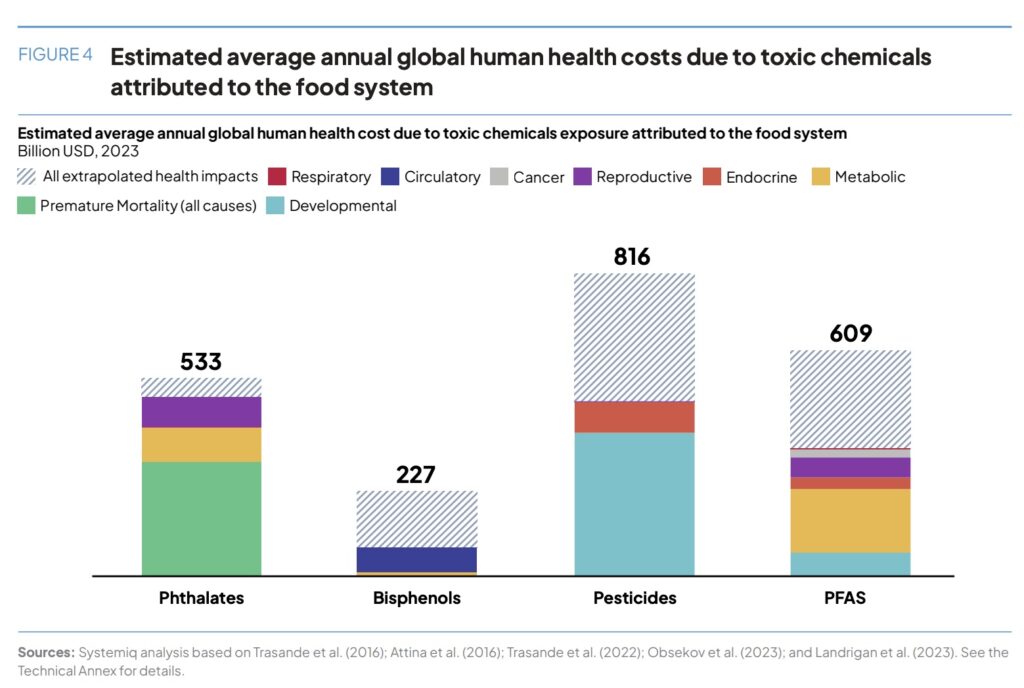
Source: SystemIQ Invisible Ingredients Study
How to Reduce Toxic Exposures When You’re TTC, Pregnant, or Raising a Family
Regulatory change is long overdue, but meaningful progress can start inside your home today.
Before we dive in, I want you to remember something important. You do not need a perfectly non-toxic home to protect your fertility or your baby. What truly makes a difference are the small, consistent choices you make over time. Start with what feels doable, give yourself grace, and let the changes build naturally. Even one or two steps from this list can have a meaningful impact.
1. Cook at home as often as possible, and buy organic
Eating out or grabbing takeout exposes you to PFAS-coated wrappers, plastic containers, and packaging chemicals that migrate into hot food. Cooking at home helps you avoid these hidden exposures and gives you more control over what goes into your meals. Choosing organic when possible also helps reduce your pesticide load.
2. Install high-quality water filters in your home
PFAS, pesticide residues, and other contaminants are common in municipal water systems. Filtering your drinking water (and ideally your shower water) significantly reduces daily exposure, especially for pregnant women and children. However, don’t rely on inexpensive big-box store water filters; choose a high-quality water filtration system instead.
3. Reduce the use of plastic in your kitchen
Plastics easily leach phthalates and bisphenols into food, especially when heated or worn. Reduce the use of plastic in your home by swapping with glass or stainless steel where possible; do your best not to heat plastic or silicone as this increases the likelihood of leaching.
4. Choose safer cookware
Nonstick coatings are a major PFAS source. Stainless steel, cast iron, carbon steel, and glass cookware are durable, low-toxin, and safe for daily use. You can browse some of my kitchen-safe recommendations here.
5. Be mindful of pesticides and herbicides
Buy organic when possible, familiarize yourself with the dirty dozen produce list (these are the fruits and vegetables found to contain the highest level of synthetic pesticides), and wash your produce thoroughly. Consider soaking your produce in a baking soda and water solution for a few minutes.
Avoid the use of synthetic pesticides in and around your home, instead opting for organic or essential oil-based pest reduction. And be mindful and aware of how babies and toddlers can be exposed to pesticides.
6. Simplify your personal care and cleaning products
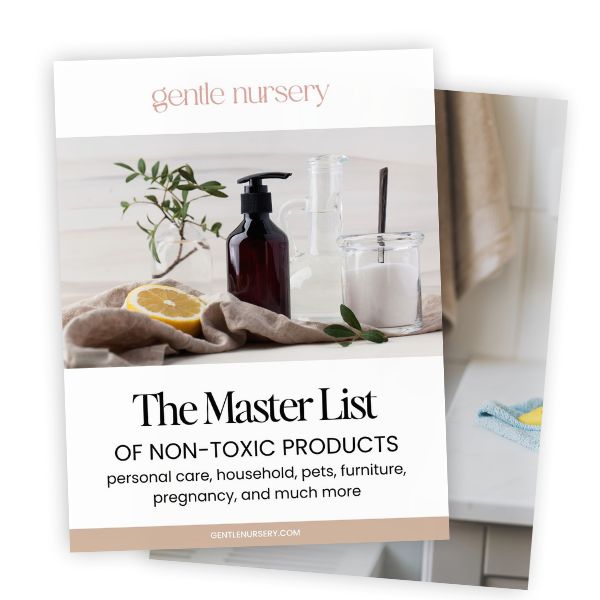
Fragrance is a major phthalate source. Choose fragrance-free or naturally scented household and personal care products, reduce the use of unnecessary products or products with long ingredient lists, and switch to cleaner brands that you can trust. Fewer, cleaner products mean less daily exposure. Check the Master List for product recommendations.
7. Be aware of stain-resistant or waterproof coatings
I always recommend avoiding anything that claims to be waterproof or stainproof because these treatments are PFAS-based, for the most part.
PFAS are commonly found in:
- nonstick cookware
- stain-resistant furniture
- waterproof gear
- food wrappers and takeout containers
Small swaps and a little avoidance here make a big difference.
8. Improve indoor air quality
Babies and toddlers ingest household dust through normal hand-to-mouth behavior, and dust is a major source of phthalates and PFAS. Vacuum regularly with a HEPA filter, open windows for ventilation, and use an air purifier in common areas or bedrooms.
Final Thoughts
Motherhood is full of things we can’t control… but this is one area where our small, steady actions truly matter. The science is crystal clear that toxic chemicals in our environment influence fertility, pregnancy, and childhood development. But it’s also clear that reducing exposure, even gradually, creates positive, measurable change.
You don’t need to overhaul your whole life. Start with one or two swaps that feel doable. Let it build from there. Every change you make supports your hormones, your fertility, and your family.
Spread awareness by sharing this post!
Resources:
- Invisible Ingredients: Tackling Toxic Chemicals in the Food System
- The Institute for Preventive Health
Recommended:




Leave a Reply