
Once you’re in the third trimester of pregnancy, and your due date is starting to actually feel close, you might start wondering what to pack in your hospital bag.
It’s natural to want to bring along a lot of things to make sure you’ll be comfortable during your hospital stay; after all, you’re going in for one of the most important and life-changing experiences of your life! So, in the name of being prepared, it’s very easy to overpack and bring a ton of unnecessary things with you.
But I have good news – this isn’t something you need to stress about! The hospital or birthing center you deliver in will provide a lot of the necessities you’ll need during labor and after birth, so you’ll only need to pack some essentials to help you feel comfortable and prepared after giving birth. So, here’s the only pregnancy hospital bag checklist you’ll need…from a second-time mom who has definitely been there and done that.
Honestly, I packed so many unnecessary things in my hospital bag the first time. I can laugh at it now, but it was pretty ridiculous. I packed two bags and wanted to be extra prepared (I had no idea what to expect) so I brought along a ton of unnecessary items. I mean, there was just SO MUCH STUFF! It was like I was moving in or going on a trip. It made no sense for us to have to transfer these items from room to room once I was moved to the birthing room at my hospital.
Skip the Research… It's Already Been Done
12+ years of label-reading, testing, and returns — these products earned their place on my Amazon store.
Shop My Amazon PicksAfter that experience, I promised myself I’d be more efficient the next time around and only bring what I actually needed. I’ve also learned so much about making healthier product choices for my children since my first birthing experience that I now know what I’d like to bring to the hospital for the baby.
I hope you find this pregnancy hospital bag checklist helpful and that you discover lots of items you may not have thought about.
Don’t forget to download the free printable hospital bag checklist!
When Should You Pack Your Hospital Bag?
It’s best to pack your hospital bag when you are around 36-37 weeks pregnant. If you have a high-risk pregnancy or have a history of preterm labor, you may want to pack your bags even earlier in your third trimester.
I like to pack my bag at least one month before my due date, to give myself time to gather all of the items I need. (I like crossing items off my to-do list as soon as possible!) I don’t think there’s one right answer for everyone, but I personally wouldn’t worry about packing your bag too early! What’s the harm in being prepared? Pack your hospital bag whenever you feel is best and store the bag in your closet.
However, I wouldn’t recommend waiting until your due date is just days away to get started. Or worse, when you’re already in labor — though I know many mamas end up doing this.
Hopefully, my pregnancy hospital bag checklist will have you prepared and packed in no time!
First, Check Out What the Hospital Should Provide
Before you pack your hospital bag, it’s helpful to know what your hospital or birthing center may provide. Of course, each facility is different and will provide different supplies, but you can count on your hospital to provide the basic necessities that you and your baby will need during your stay. If you take a hospital tour before going into labor — which I definitely recommend — you may want to ask which items they will provide, and what they don’t.
What Hospitals Provide for Babies
Diapers and wipes (usually Pampers), swaddle blankets, receiving blankets, burp rags, hats, shirts, formula, and bottles (if needed). Some – but not all – hospitals will provide pacifiers upon request. I like to bring along some of these items myself, such as diapers and wipes. (Baby’s hospital bag checklist is below.)
What Hospitals Provide for Moms
Hospital gowns; postpartum mesh underwear, cool pads, and maxi pads; Tucks and Dermoplast Pain Relieving Spray; pain relief medication; peri bottles; towels; stool softener; meals; breastfeeding support, including lactation consultant visit, lanolin, breast pads, hot/cold therapy, and a hospital-grade breast pump (if needed); and a birthing ball (not all hospitals will have this).
As you can see, the hospital will likely provide most of the items you need during your stay. But it’s important to note that even though these items are provided to you (and billed to you), you’ll probably want to bring in some of your own products. For example, my hospital provided Pampers diapers and wipes which gave my poor little guy a bad diaper rash. I promised myself that I would bring in my own diapers and wipes from day one next time. And the pain relief spray I was given worked well, I’ll admit, but it was loaded with unnecessary chemicals so I knew that I wouldn’t use that again unless absolutely necessary. Since you’re set on using more natural products for yourself and your baby, you can begin right away — during your hospital stay.
Hospital Bag Checklist: Everything You’ll Need for Mom, Baby, and Dad
This gorgeous weekender bag is about the right size for a hospital bag. You could also keep baby’s things separate in a diaper bag, though it’s not necessary.
If you’re being induced, you may end up staying overnight before labor actually kicks in, so you may need both bags right away. In that case, I also recommend bringing reading material and a laptop or tablet device to help pass the time before labor begins.
Mom’s Labor Bag Checklist
Driver’s license and insurance card: You’ll need these when you check in to the hospital. Be sure to pre-register at your hospital well in advance so that you can skip this step when you arrive.
Birth plan: It’s wise to know your birthing preferences beforehand, so I recommend creating a birth plan (and printing out a few copies) that you can share with the Labor & Delivery nurses when you arrive. Go over this with your doctor beforehand to ensure you’re on the same page about your preferences. For more on birth plans, download my free birth plan template.
Phone charger: You’ll definitely want to have your charger on hand during your stay in the hospital. Any phone charger cable will do but ideally you’ll want one with a longer cord, which will come in handy at the hospital in case the bed isn’t right next to an outlet.
Shower sandals: I recommend buying a cheap pair of flip flops to use in the shower at the hospital. Keep these in your laboring bag because you’ll likely find yourself in the shower during labor since hot water can be very soothing and comforting during contractions. The best part is that because they’re so inexpensive, you can (and should) toss them once you’re discharged from the hospital.
3-4 pairs of socks and slippers: Along the same lines, bring some comfortable socks and/or slippers to walk around in during labor and for your hospital stay.
Hair ties: You’ll want to have some hair ties to tie back your hair during labor. I have long hair so I keep these in my purse at all times, anyway.
Lip balm: A lot of moms like to have lip balm on hand during labor. This is especially helpful if you’re in labor for a long time. I almost never go anywhere without mine!
Birthing ball: If your hospital doesn’t provide one, you should be able to bring your own birthing ball for use during labor. If the ball won’t fit into your car fully inflated, you can partially deflate the ball and pump it back up to its full size when you arrive. This particular birthing ball comes with its own pump.
Camera: You’ll forever want to remember that sweet moment that you first meet your baby, so I recommend having someone snap a couple of photos. You can ask a nurse or someone else in the laboring room take photos for you using a cell phone or digital camera. DSLRs aren’t necessary unless you have someone experienced using them. Oh, and {please} don’t let anyone snap the flash in your baby’s face.
Tennis balls and a tube sock (optional): This is a homemade pain remedy that you might find helpful during labor. Just place 3 tennis balls inside a tube sock and have your partner roll them up and down your back, applying gentle pressure to help ease contraction pain.
Birthing gown (optional): Some women prefer to birth in style with a cute birthing gown. This wasn’t particularly important to me during labor, but I can definitely appreciate the desire to look and feel good during labor.
Mom’s Overnight Hospital Bag Checklist
Toiletries: Be sure to bring your own toiletries to the hospital, including a toothbrush and toothpaste, face wash, moisturizer, deodorant, travel size amounts of your shampoo and conditioner, body lotion, and body wash.
Want to Save This Post?
Glasses/Contact Lenses: Don’t forget your contact lenses or glasses, if you wear them. Bring a carrying case and contact solution for your contacts.
Postpartum Essentials: While the hospital will provide you with all the postpartum supplies you should need, you may want to bring in your own natural and healthier versions. As a second-time mom, this was really important to me and I was so glad I could avoid the nasty chemicals in the products the hospital gave me. Instead of Dermoplast, you could try Earth Mama Organics Herbal Perineal Spray and their Organic Perineal Balm. If you aren’t crazy about the hospital’s peri bottle (let’s be honest — it gets the job done but leaves a lot to be desired), consider bringing your own Fridamom Upside Down Peri Bottle, or at least have this waiting for you at home in your postpartum care kit. I can’t rave enough about the MomWasher – I think every new mom should have one! If you aren’t a fan of using the hospital’s maxi pads, you can bring your own chlorine-free and unscented pads such as Rael Overnight Maxi Pads. Instead of using Colace stool softener, try magnesium, magnesium oil, and prenatal probiotics.
Pajamas (2-3) and Nursing Bras (1-2): You’ll feel much more comfortable in soft pajamas than in a hospital gown, so I recommend switching to your own PJs as soon as you can. Luckily, you don’t need nursing pajamas; any button-down PJs will work just as well for breastfeeding. If you’re looking to pamper yourself a bit – and you definitely deserve to – you’ll love Kindred Bravely’s nursing pajamas. They are so comfortable and well-made! And you’re giving birth and need to recover, so it’s nice to spring for a pair or two if you can! As for nursing bras, consider bringing along 1-2 Cake Luxury Cotton Candy Bras or Organic Nursing & Maternity Sleep Bras (which are great for sleep).
Nursing Tanks (2-3) and Yoga Pants (2): When you aren’t in your pajamas, you’ll probably be wearing a nursing tank and yoga pants (if you’re anything like me…). Make sure to bring these along with you to make nursing easier and so that you’re comfortable while you’re in the hospital.
Underwear: The hospital provides amazing disposable mesh underwear that works really well, especially since you’ll probably be wearing bulky pads for a few days. If you find these comfortable, take some of them home with you. But, you may feel more comfortable bringing your own underwear. If you have a vaginal birth, you won’t want to wear any cute or fancy underwear because of the amount of bleeding you’ll experience; instead of ruining your regular underwear, bring along some inexpensive undies like these boy shorts or panties. Either way, these will come in handy once you get home. You could also consider using leakproof period panties as I know some moms have had luck with these postpartum.
Prenatal vitamins: The hospital can provide you with prenatals, and they’ll probably say they want you to take theirs so they can monitor your prenatal intake. However, I declined this because the hospital provides prescription prenatal vitamins which usually contain horrendous ingredients, including food dyes and petrochemicals. Bring your own stash of prenatal vitamins! If you’re in the market for a new prenatal vitamin, consider Biomeology’s Methylated Prenatal Vitamins. In addition, I also recommend taking Nordic Naturals Prenatal DHA because MegaFood prenatals don’t contain DHA. And Biomeology Prenatal Probiotic because both mom and baby will benefit from exposure to these targeted strains.
Bath towels (1-2): Bring a bath towel of your own because hospital towels are thin, small, and rough. I brought a towel that I knew I would be comfortable leaving behind, and recommend you do the same. If you don’t have any at home that you could get rid of, you could pick up a couple of inexpensive towels just to bring with you. At least you know they’ll be better than what the hospital provides.
Compression socks: If you’re like me and you get varicose veins during pregnancy, you will definitely (without a question) want to bring your compression socks to the hospital! After my son was born, I almost couldn’t walk for the first few days because of how painful my varicose veins were. I hope you don’t have the same experience as I did, but recommend that you bring yours, just in case!
Hair and beauty products: After giving birth, you’ll feel so much better after taking a shower and doing your hair. If you’ll be in the hospital for a couple of days or longer, I recommend bringing a hairdryer (I have curly hair and can’t live without my diffuser), along with any other essential styling tools you’ll need. And bring along your makeup bag, just in case you get inspired to freshen up your look for visitors in the hospital or before you head home (I personally didn’t…). I would also throw in some dry shampoo, just in case you need a quick freshening up.
Snacks and change for the vending machine: While meals will be provided by the hospital and vending machines are usually available, it’s wise to also bring a couple of your favorite snacks. I personally eat before and during labor, though I know that there are different schools of thought and requirements on this. I brought honey sticks to the hospital with me my first time around, and they just didn’t cut it. I needed real food to keep up with my body’s needs. Also keep in mind that breastfeeding burns a lot of energy and requires extra calories, so you’ll want to make sure you are well-fed while keeping portions under control. You could bring in a small bag of almonds and raisins or trail mix, fresh fruit like apples or oranges, instant oatmeal, Kind Bars, Fig Newmans, or whatever else you might like that isn’t perishable. Follow your {healthy} cravings on this one, mama!
Going home outfit: Don’t forget to bring something for yourself to wear on the ride home. And try to remember to take some pictures!
Gift for baby’s older sibling(s): If you have any older children and plan to give them a gift from the new baby, don’t forget to wrap it and bring it to the hospital.
Baby’s Hospital Bag Checklist
This is one area where you can decide how much or how little you’d like to bring. For my first baby, I didn’t bring much to the hospital for my baby except shampoo for his first bath, a going home outfit, and a car seat. In retrospect, I wish that I had brought along my own diapers and wipes and other supplies. So, choose what is important to you from this list and pack your baby’s bag for their birthday!
Correctly installed car seat (mandatory): You’re required by law to have your baby in a car seat in any vehicle, so this is one item that you must have with you. Ideally, all parents should install the car seat in their car and learn how to safely use the seat well before mom goes into labor. I’ve created a list of non-toxic car seats, and I recommend that you also spend time learning how to use the seat safely. I hired a CPST to check my installation and walk me through safely buckling my little one in his seat and strongly recommend you do this as well.
Baby’s going home outfit: Bring something special for your baby to wear on the drive home. It doesn’t have to be fancy, but it’s nice to remember what your little one wore when you left the hospital as a family of three (or four, five…).
Baby book: If you have a baby book that has a space for baby’s hand and footprints, be sure to bring that with you. After your baby is born, a nurse will examine him and take foot and handprints; you can ask them to imprint your baby book at that time.
Baby care products: I would recommend bringing your own baby care products to avoid having to use the products provided by the hospital. Personally, I don’t think babies need to be bathed right away, but if you decide to let the nurses give your baby a bath in the hospital, I would definitely bring in my own baby wash such as Earth Mama Baby Wash & Shampoo. Instead of using Desitin, for example, I would prefer using Earth Mama Organic Diaper Balm (if needed at all). And instead of using Vaseline or petroleum jelly, I would bring in some coconut oi, Matys All-Natural Baby Ointment or Burt’s Bees Baby All Natural Multipurpose Ointment. You can include your baby care preferences in your custom birth plan.
Nursing Pillow (optional): I’m on the fence as to whether this should be considered an essential item or not, but you may want to bring your own nursing pillow in the hospital. The hospital might have one you can use, but I recommend buying an organic nursing pillow and just love The Nesting Pillow. Check out my complete guide to organic nursing pillows for more options.
Diapers and wipes (optional): Again, the hospital will provide you with all the diapers and wipes you need, but you may prefer to bring in your own eco-friendly alternatives. Find your favorites from my guide to non-toxic diapers.
Baby’s clothing and swaddles (optional): The hospital will provide you with baby clothes (typically a long-sleeved kimono shirt) and swaddle blankets during your stay. But if you think about it, these items have been washed with harsh industrial detergents and worn several times over. Decide if you’d like to bring your own swaddles, kimono shirts, socks, mittens, and pants. (Note: I recommend bringing home a few swaddle blankets from the hospital if your baby takes to them, though.)
Dad’s Hospital Bag List
For Dad, make sure he packs an overnight bag with some basics including:
- Toiletries
- Slippers
- Socks
- Pajamas
- Change of clothes
- Phone charger
I hope this hospital bag checklist has been helpful. Be prepared so that you’re as comfortable as can be during labor and your hospital stay. You’ll do great, mama! Here’s wishing you a healthy and happy labor experience for you and baby. <3
Download my Free Hospital Bag Checklist PDF Guide and Printable
Download a helpful printable checklist to help you with packing your hospital bag.
Want more support during your pregnancy?
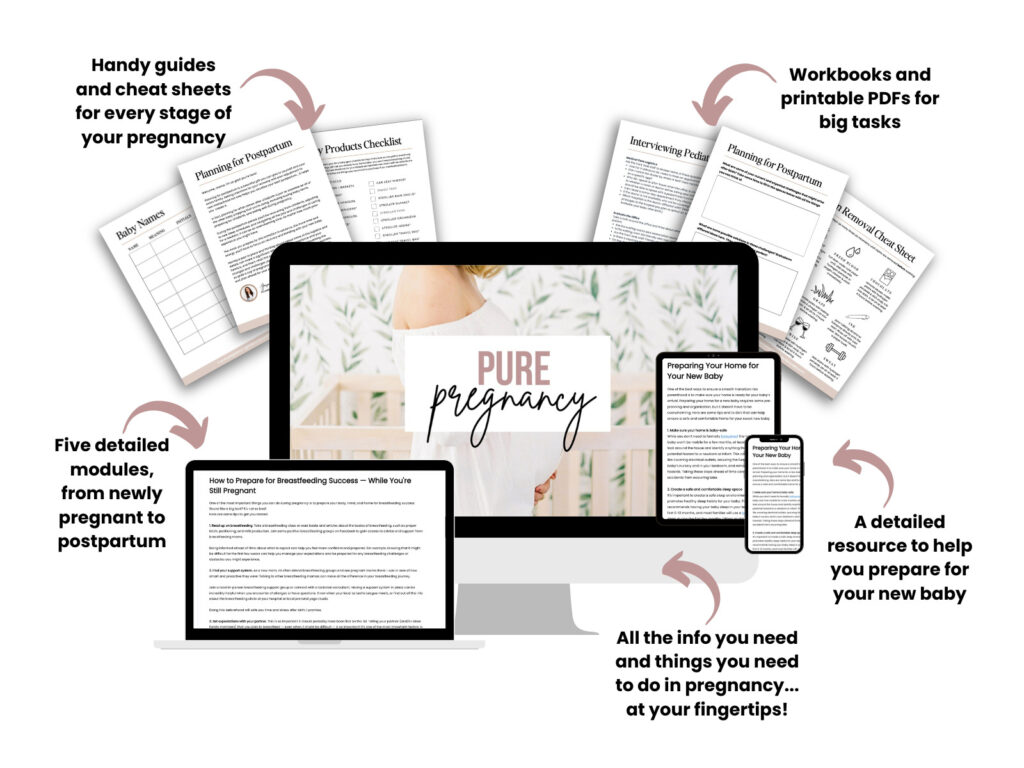
Join PURE Pregnancy, my holistic pregnancy guide. Have your best, most prepared pregnancy… starting today!
If you found this hospital bag checklist useful, save it for later!


Keep Reading:






Leave a Reply